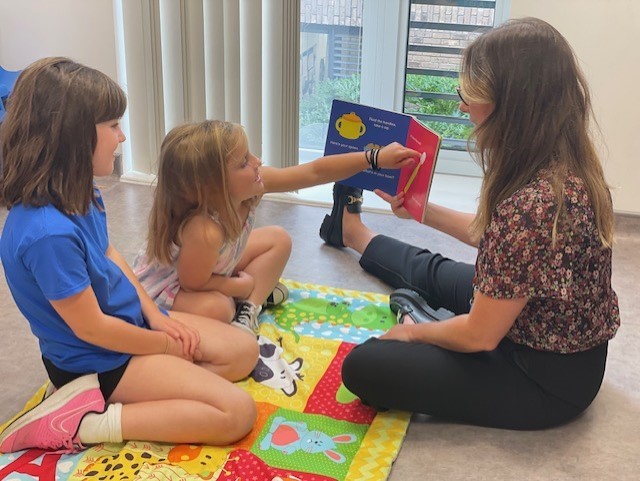
Speech and Language Therapy is the treatment, support and care for children and young people who have difficulties with communication or eating, drinking and swallowing. There are Speech and Language Therapy teams based in local hospitals and health centres across the Lothian region.
Speech and language therapy services can support babies, children and young people with:
- speech sounds
- stammering
- voice problems, such as hoarseness and loss of voice
- understanding language (making sense of what people say)
- using language (words and sentences)
- interacting with others
- eating, drinking and swallowing
Speech and Language Therapists are Allied Health Professionals. They work with parents, carers and other professionals, such as doctors, nurses, Health Visitors, teachers, nursery staff and Occupational Therapists.
In the hospital, the Speech and Language Therapy team supports children and young people with speech, language, communication, eating, drinking and swallowing difficulties.
These may be due to a condition a child is born with, such as a cleft palate, after an injury (known as trauma), operation or changes to their health.
They provide support and advice for babies and young children where a long hospital stay might affect their development.
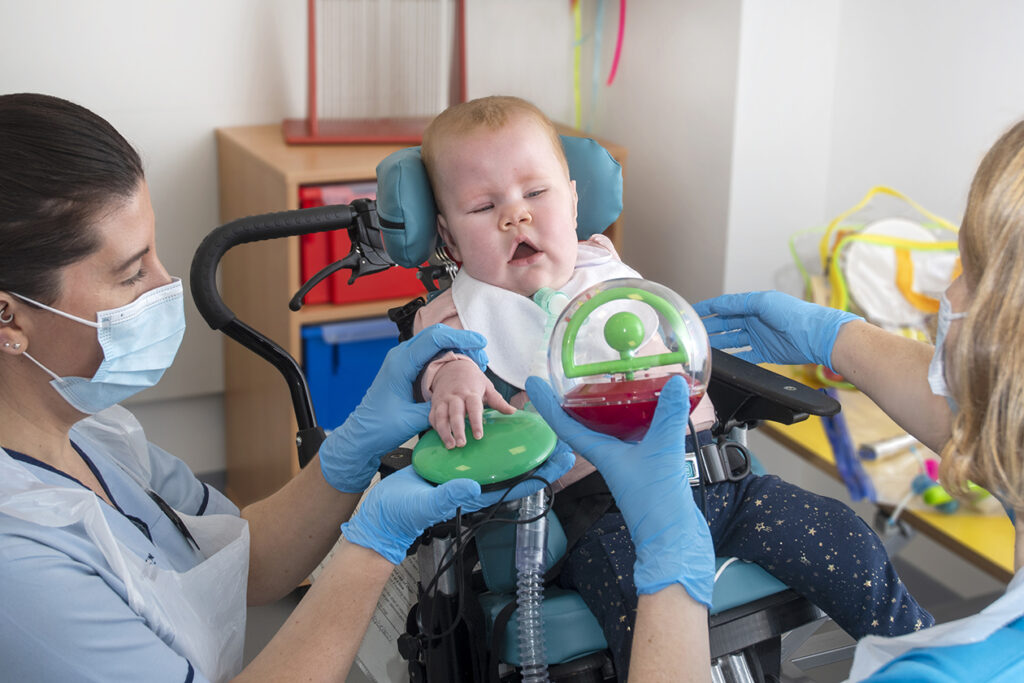
The team promotes inclusive communication across the hospital, raising awareness about signing, visuals and technology to help young people who communicate in different ways.
Working as part of a team of specialists (known as a multi-disciplinary team), they also provide support and training for carers, staff and volunteers.
In the community, Speech and Language Therapists work in teams based at local hospitals and health centres across the Lothian region. They might visit children in an early years setting (such as a nursery) or at school.
Local helplines for advice
If you have queries or concerns about your child’s speech, language and communication, please call the Speech and Language Therapy helpline in your local area to talk to a Speech and Language Therapist for advice. Helplines are open to everyone. Find your local helpline number and available times.
General Information & Advice

Preschool children
Parents and carers of preschool children might find helpful resources on the Let’s Talk website, including tips and information to support speech and language development in younger children.
You can also find us on Facebook or Instagram.
A range of information and advice leaflets can also be found below.
Supporting your child’s communication
- Aided language board PDF
- Intensive Interaction PDF
- Introduction to Visual Supports PDF
- Getting started with Signalong DOCX
- Object Signifiers PDF
- Song Signifiers PDF
Supporting your child’s eating drinking and swallowing
Language and Literacy
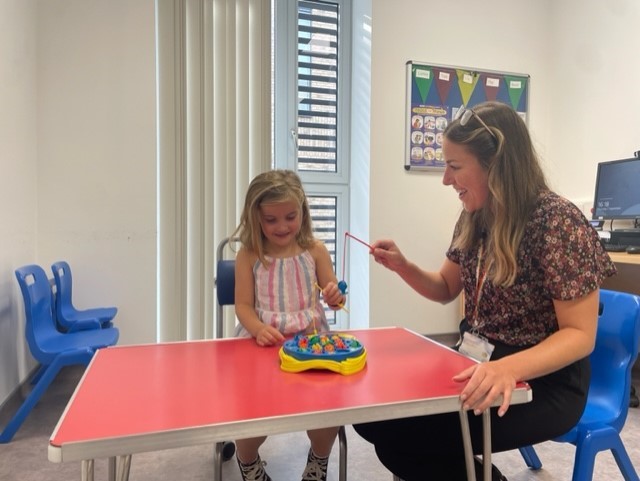
All children are different. Some are chatty and confident, others may be quieter or more thoughtful. However, all children need to have good foundations in spoken language to help them to participate and contribute at school. Spoken language skills are also an essential foundation to literacy (reading and writing).
Parents of school-age children may be interested in some of the following websites.
- Speech & Language UK
- National Literacy Trust’s Words for Life
- Developmental Language Disorder is a common condition that affects around two children in every classroom.
- Teachers and other educators may be interested in this article about Developmental Language Disorder published in the Times Educational Supplement in 2018.
- ICAN – resources for primary and secondary teachers who have children with language difficulties in their school.
- CIRCLE – early years, primary resources PDF and secondary resources PDF
Advice leaflets for language & literacy
Communication in the classroom
- Strategies to support understanding in the classroom (PDF)
- Supporting basic vocabulary in the classroom (PDF)
- Teaching new vocabulary in the classroom (PDF)
- Supporting expressive language difficulties in the classroom (PDF)
Comprehension
Word Finding
Autism
Autistic people are part of the neurodiverse population. Some people are neurotypical, which means that their way of thinking is similar to the majority. Some are neurodivergent, which means that their way of thinking is different to the majority.
At least 1 in 100 people are autistic, and may also have associated disabilities such as ADHD or another intellectual disability.
Children with autism can have particular skills, interests, talents and needs. Some might have communication difficulties.
Respecting and learning from the autistic community helps us towards our goal of Getting it Right for Every Child (GIRFEC) in Scotland.
How is autism diagnosed?
Families with a child with ASD or autism may already have a diagnosis or may be waiting for a full neurodevelopmental assessment. The charity Scottish Autism has information and guides for families about ASD, Autism and how a child or young person might be diagnosed.
Parents and carers of a child on the waiting list for a neurodevelopmental assessment can find further information about support and advice available on our child development page.
Support for your child(ren) with autism
Many children and young people with autism attend their local school, with support and accommodations depending on what they need. Read more about support for children in education.
For information about how to provide inclusive support for an autistic child in school download ‘Meeting the needs of autistic learners. A professional guide for teachers (PDF).
Parents of autistic children seeking information and ideas about how to support their autistic child’s communication and interaction may be interested in some of the following websites:
- The Hanen Centre is a not-for-profit registered charitable organization, based in Toronto, Canada. The website contains information about parent programmes, which are available for families living in Lothian. Currently, programmes are delivered via telepractice.
They also have some useful articles in easy-to-read format. - Talking Mats is a social enterprise. The company developed a tool for people with expressive communication difficulties. It enables children to have a picture-based conversation about their feelings when they might find using words difficult.
- The Social Thinking methodology explores how to support people to recognise their own and others’ thoughts, feelings beliefs and intentions. Social Thinking has free webinars and resources.
- Different Minds (Scotland) is a website created by the Scottish Government, written in partnership with autistic people.
A number of third-sector organisations provide support, guidance and some leisure opportunities for autistic people:
For information about using visual supports download Guides to using Home Visual Supports (PDF)
For information about advocacy support, visit the Enquire website.
Deafness & Hearing Loss
Most children in Edinburgh and the Lothians are diagnosed with a hearing loss through the Audiology department, based at the new Royal Hospital for Children and Young People in Edinburgh.
All children in the UK receive a newborn hearing screen which is carried out shortly after a baby is born. Most cases of deafness in babies are picked up through this screen and are fully-diagnosed after further testing at the audiology department.
Most deaf children are born to hearing parents. There are varying degrees of deafness, through mild – moderate – severe – profound. The National Deaf Children’s Society (NDCS) has a comprehensive guide on deafness and what it is.
Many deaf children also have other challenges such as a syndrome or an additional diagnosis, e.g. autism.
Specialist Speech and Language Therapy Support
In Lothian, there is a small specialist team of Speech and Language Therapists (SLTs) who work mostly with children who have a severe or profound and permanent (known as sensori-neural) hearing loss. We also work with children who have a diagnosis of Auditory Neuropathy Spectrum Disorder.
The team works across all areas of East, West, Mid Lothian and the City of Edinburgh.
What We Do:
- Provide specialist advice and strategies
- Provide early feeding advice for new parents
- Model and support parent-child interaction strategies
- Train teachers and other professionals
- Give advice around signing
- Assess your child’s speech, language and communication.


SLTs work as part of a much bigger multi-disciplinary team, made up of other professionals such as teachers of the deaf, audiologists, paediatricians, teachers and most importantly, families.
Not all children who have a degree of deafness will have speech and language issues. However, children who have a recurring or permanent hearing loss can have ongoing difficulties with speech, language and communication, especially if a child doesn’t have or wear their hearing apparatus (hearing aids, bone conduction band or cochlear implants), from a young age.
Many of our SLT colleagues, who work in schools, hospitals and community clinics, also work with children with a variety of different hearing issues such as glue ear, unilateral, mild and moderate hearing loss. Some of these types of hearing loss may be caused by a conductive hearing loss (where sounds cannot pass through the ear due to a blockage) and may not be permanent.
Support & further information
National Deaf Children’s Society
The NDCSthe has a fabulous amount of information and advice for families and professionals on all things related to deafness such as signing, upcoming training, videos to encourage early language and so much more.
Deaf Action
Deaf Action is a fabulous local organisation that supports deaf people and their families with training in British Sign Language, deaf awareness and practical support where appropriate.
Reading books for children
Below are some books which may be helpful to a deaf child or their friends or siblings to help them to understand what is going on in their life:
- What the Jackdaw Saw, by Julia Donaldson, is a book about friendship and sign language (age 3-6)
- Freddie and the Fairy, by Julia Donaldson, is a book about a deaf fairy who keeps getting wishes wrong (age 3-7)
- Jake and Jasmine to the Rescue, by Karen Harlow is about Jake, a child with a cochlear implant, who teams up with a new girl to find the lost school pet.
- Dachy’s Deaf, by Jack Hughes, is about a deaf dinosaur who wears hearing aids and likes to turn them off sometimes, with interesting consequences! (age 4- 7)
- Proud to Be Deaf, by Ava, Lilli and Nick Beese, is a child-led book that embraces bilingualism and being part of the deaf community (age 5-7)
- Mighty Mila, by Katie Petruzziello, is about a character who uses her personality and creativity to help her overcome obstacles, including her new cochlear implant (age 3-8)
- Can You Feel the Noise?, by Stewart Foster, is a story about inner strength and overcoming life’s challenges when a girl suddenly becomes profoundly deaf (age 8 and above).


Selective Mutism
Selective Mutism, sometimes called Situational Mutism, is a type of anxiety disorder where a person is unable to speak in certain situations. Specifically, it is a type of phobia; just like a person has a phobia of spiders, snakes, or heights, a person with selective mutism has a phobia of the expectation to speak in certain situations. This is not a choice or refusal to speak; the person cannot speak due to extreme feelings of anxiety and panic.
The following websites are recommended for parents seeking information and advice on how to support their child or young person with selective mutism:
Further information about the signs and causes of selective mutism, diagnosis guidelines, associated difficulties, treatment options and general advice for parents.
SMIRA (Selective Mutism Information and Research Association) has information for parents and professionals, and teens and adults. It includes a range of advice sheets that can be downloaded and shared, information on training courses in the UK, and recommended reading.
iSpeak is for teenagers and adults with insightful videos, BBC radio programmes and interviews of adults and children with selective mutism, as well as suggested articles and further reading.
The following documentaries on selective mutism in children and young people are available to watch on YouTube.
Stammering
Help from Speech and Language Therapy

If you have looked at our online information and advice and need further support, parents, carers and professionals can contact our helpline service to request assistance. Anyone can call to talk to a Speech and Language Therapist for advice. You don’t need to go to your GP, Health Visitor or school first.
When a request for assistance has been received, information is gathered to decide what help would benefit the child or young person, based on their needs and the impact their communication issues are having. Help available might include:
- Providing information and support.
- Signposting to other services, such as community resources or groups.
- Supporting and offering tailored advice for parents/carers and the family, for example, simple games to try at home.
- Consulting with and advising education staff to help children at school or nursery.
- Assessing and offering intervention if needed, for example, face-to-face appointments.
You may be offered a face-to-face, telephone or video appointment. Appointments can take place in the Outpatient Department at the Royal Hospital for Children and Young People, or at one of the community-based locations across the Lothian region.
What can parents and carers expect?
- Phone contact will normally be made before meeting your child or young person in order to make arrangements that will suit you best.
- A clear plan focussing on what matters to the family will be made following observation or assessment.
If you are already known to our service and have a general enquiry, please use the contact details below:
East Lothian
Musselburgh Primary Care Centre
Inveresk Road
Musselburgh
EH21 7BP
Tel: 0131 446 4009
West Lothian
St John’s Hospital
Howden Road West
Livingston
EH54 6PP
Tel: 01506 524191
Midlothian
Newbattle Medical Centre
Mayfield
Dalkeith
EH22 4AA
Tel: 0131 454 9544
East Edinburgh
Gracemount Medical Centre
24 Gracemount Drive
Edinburgh
EH16 6RN
Tel: 0131 672 9456
Leith Community Treatment Centre
12 Junction Place
Edinburgh
EH6 5JA
Tel: 0131 536 6467
West Edinburgh
Sighthill Health Centre
380 Calder Road
Edinburgh
EH11 4AU
Tel: 0131 537 7119
Help for professionals
Professionals working with families, including teachers, health care professionals or social workers, can also request help from Speech and Language Therapy, with the parent or carer’s consent.
Simply complete the request for assistance form and return it (by secure e-mail) to your local department:
- Edinburgh loth.childrenyoungpeoplesslt@nhs.scot
- East Lothian loth.childrensslteastlothian@nhs.scot
- Midlothian loth.childrenssltmidlothian@nhs.scot
- West Lothian loth.sltcypwlrequestforassist@nhs.scot
We ask that you do not email your request for assistance forms from a ‘midlothian.education’ account, as these are not secure and may be blocked.
