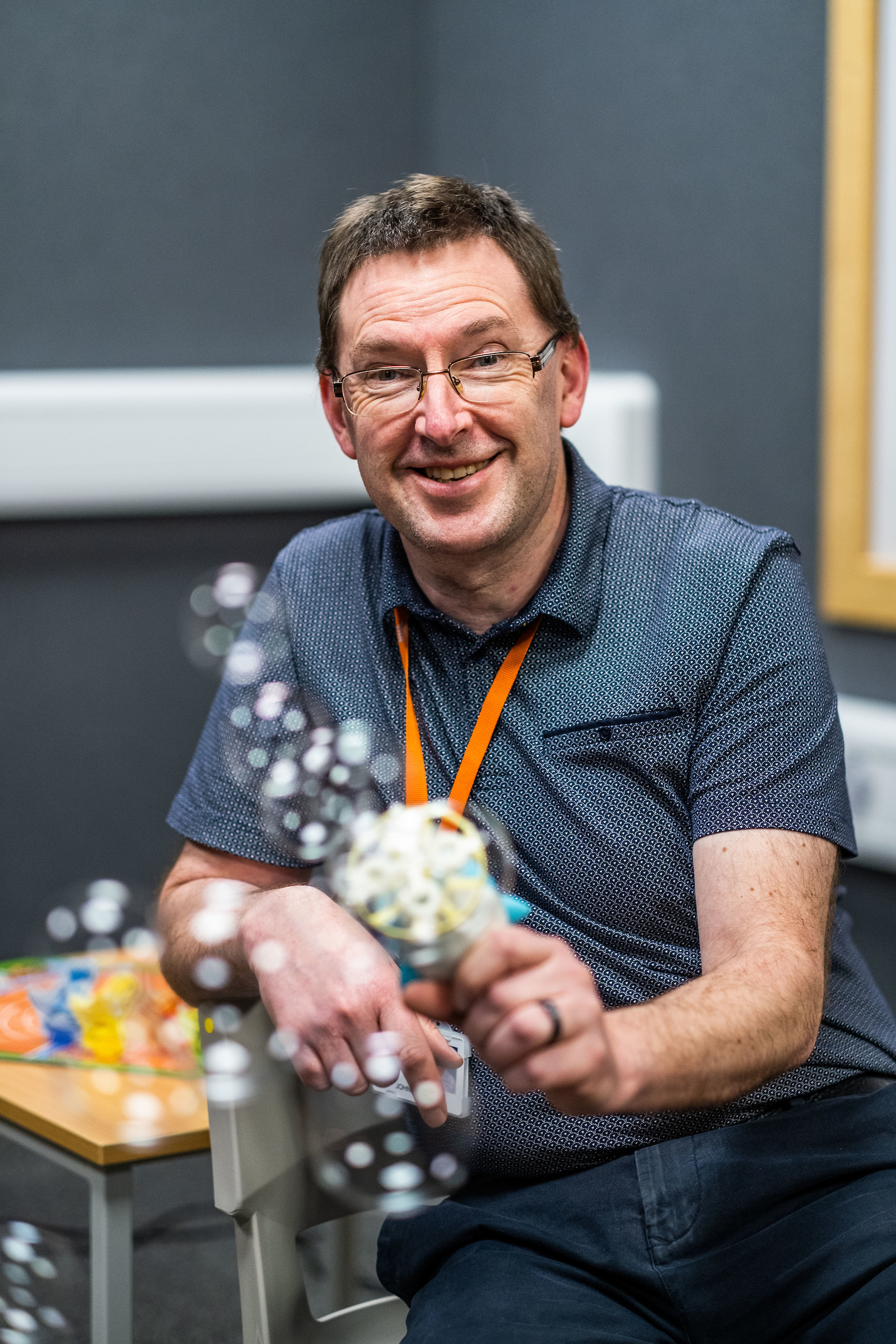
The Paediatric Audiology team looks after and checks the hearing of babies, children and young people.
We are a group of experienced paediatric audiologists with specialist skills to understand and treat hearing problems.
What we do
- Screen the hearing of every newborn baby in the Lothian area
- Test the hearing of all children and young people
- Help children and young people with hearing loss – maybe by giving them hearing aids
- Help children and young people who may be sensitive to sound or hear noises in their ears
ABR Testing
ABR stands for Auditory Brainstem Response. This type of test is a follow-up hearing assessment for babies up to around 3 months old. It is safe and painless, and checks how a baby’s brain and hearing nerves respond to sounds.
More BSL video content is available in the tab below.
For an ABR test, your baby needs to be asleep. It is helpful to arrive with your baby already awake, ready for a feed and a little sleepy. This gives the best possible chance for the test to be completed.
Please do not bring any other children along to your appointment as this might make it harder for your baby to fall asleep.
Please bring at least one feed with you (e.g. a prepared bottle if you are not breastfeeding), a couple of spare nappes and whatever else your baby needs to feel relaxed.
Results from an ABR test are usually available immediately afterwards.
VRA Testing
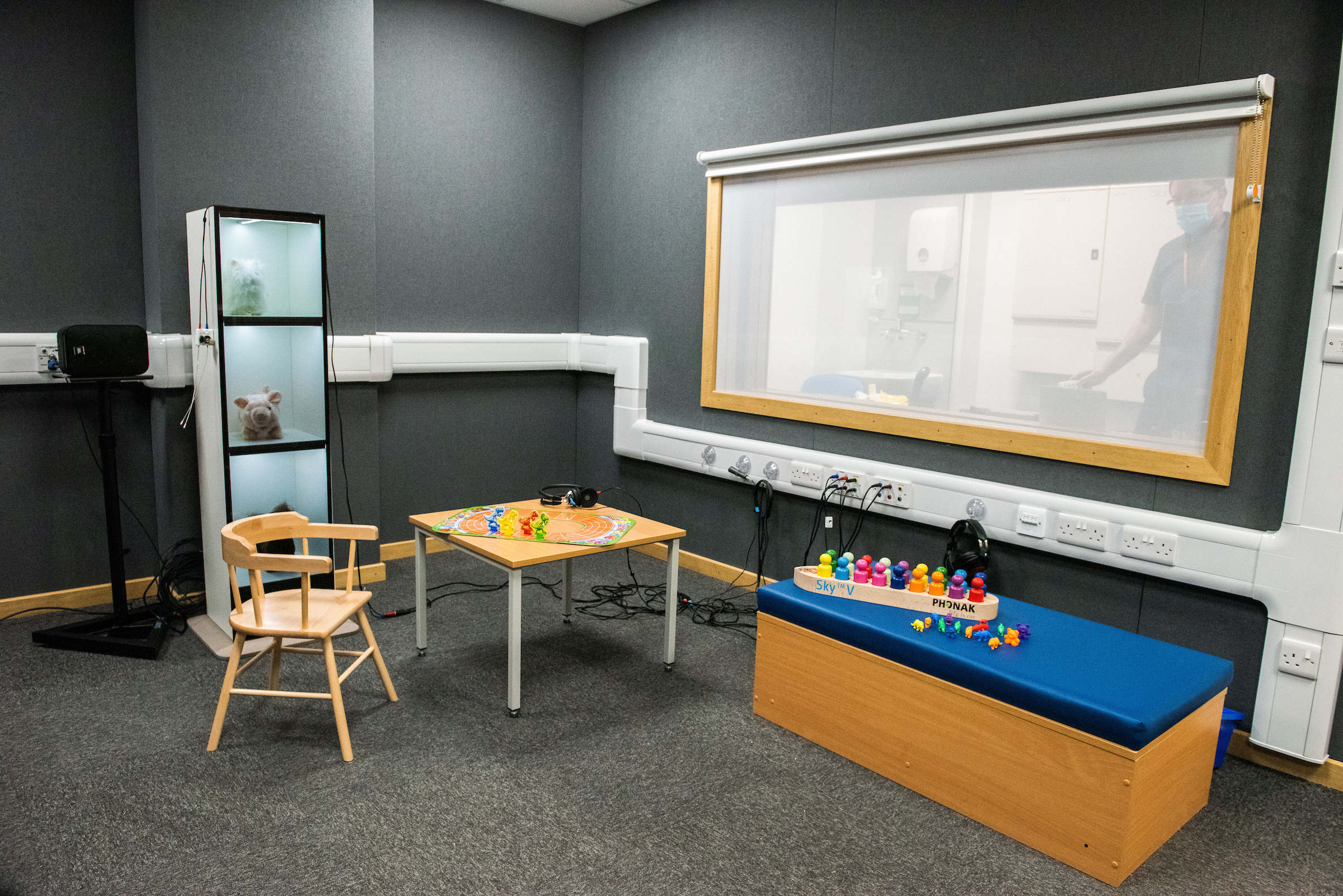
VRA stands for Visual Reinforcement Audiometry and is a type of hearing assessment for babies and young children up to around two and a half years old. It is safe and painless and our team of Audiologists will have plenty of toys and games to keep children interested. For VRA testing, different sounds are played and the child is shown a moving toy when they turn towards the sound. Different levels of sound and pitch are usually tested, as well as a wider assessment of your child’s ears and hearing.
More BSL video content is available in the tab below.
Children are welcome to bring a favourite toy or blanket to help them feel calm and relaxed. For parts of the test, they will need to stay in a particular part of the testing room, to give the best possible chance for the test to be completed. The whole appointment takes up to 45 minutes and results are usually discussed with each family immediately after the test has ended.
Get in touch
Our telephone number is 0131 312 1407, Monday – Friday, 9am – 4.30pm.
An answerphone service is also available, with messages monitored Monday – Friday.
Appointments are usually in the Outpatients department of the Royal Hospital for Children & Young People in Edinburgh (OPD 14 / Audiology).
Information in British Sign Language (BSL)
Coming to the Audiology clinic
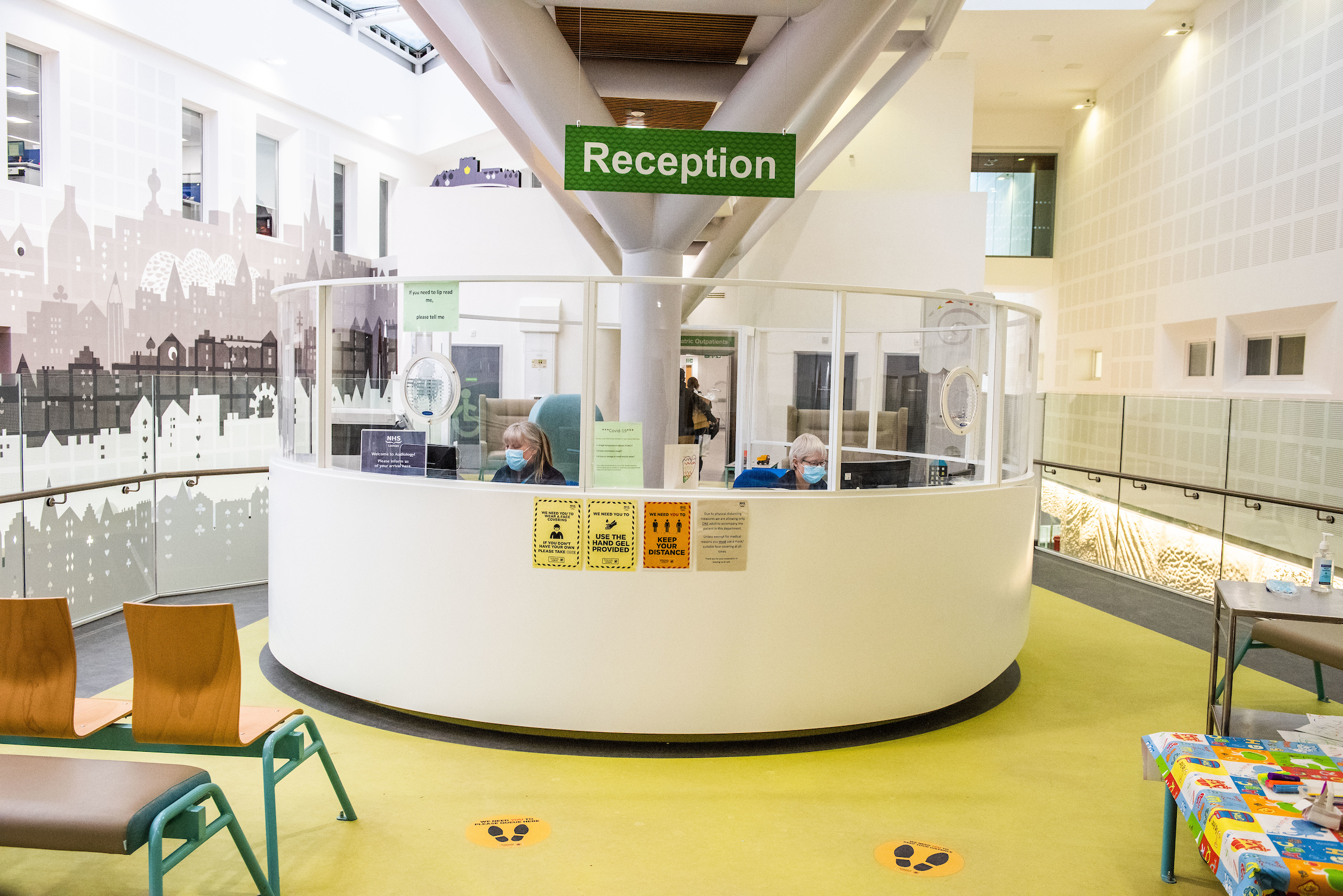
Royal Hospital for Children & Young People
Our reception desk is on level 1 in the Outpatients department – please check in at reception when you arrive and you will be directed to the waiting area.
Sometimes your appointment might take place at a local health centre close to where you live.
Please check your appointment letter carefully before you travel.
Concerned about your child’s hearing?
A hearing problem is not always obvious, particularly in young children. There are different degrees and types of hearing impairment. Although a child may respond to some sounds around the home, they may not be able to hear all the sounds that they should be hearing.
A child who has difficulty hearing may not respond to you when you are out of sight, may not respond to quiet sounds (but will respond to loud sounds), or may have more difficulty hearing in noisy places, for example in shops. Changes in a child’s behaviour can also indicate a hearing difficulty.
If you think your child has a hearing problem, a referral letter is needed from any of the following people:
- Family doctor (GP)
- Health Visitor
- School Nurse
- Community Doctor or Hospital Consultant
- Speech and Language Therapist
- Occupational Therapist
- School Teacher or Early Years Professional
When we receive your referral letter, we will add your child to our waiting list and will contact you as soon as it is your turn to be seen.
Sound sensitivity
You may be worried that your child is having some issues with sounds. There is a difference between a child who dislikes a sound and a child with a problem coping with sound sensitivity. A child presenting with sound sensitivity will always be distressed and in discomfort when they are exposed to a particular sound. Severe sound sensitivity is also called Hyperacusis.
Common sounds children react to include vacuum cleaners, hair dryers, hand dryers, sirens and the school bell. Some children have very few sounds that they find distressing and others may have a long list of sounds. This is because every child is different.
Many children with sound sensitivity place their hands over, or their fingers in, their ears. You may also see your child trying to avoid the sound or becoming very anxious even before the sound is heard. Sometimes this can be seen in your child’s behaviour, for example, maybe they don’t want to go to a particular place because of the sounds.
Does my child have sound sensitivity?
If you recognise the following behaviours in your child, they may well have sound sensitivity:
- becomes upset in response to a particular sound (cries, trembles, startles)
- protects their ears in response to a particular sound
- exhibits anxiety either before or during their exposure to a particular sound
- avoids the sound source if possible.
If your child has a severe sensitivity to sounds that is affecting their everyday life, a referral letter is needed from any of the following people:
- Family doctor (GP)
- Health Visitor
- School Nurse
- Community Doctor or Hospital Consultant
- Speech and Language Therapist
- Occupational Therapist
- School Teacher or Early Years Professional
Once the referral letter is received, your child will be placed on our waiting list to have their hearing assessed. Each family will be sent a copy of our Sound Sensitivity pack, a pre-assessment workbook to complete at home, with ideas for how to help your child cope with sound sensitivity and space to write notes. Please bring this workbook to your appointment, where we will talk about sound sensitivity, your child’s difficulties and their progress. Your appointment will also include a face-to-face hearing assessment, with a follow-up plan based on those results. While we aim to minimise waiting times wherever possible, this workbook will give you practical advice to follow before your appointment date.
Download your sound sensitivity pack for children (11 and under).
Download your sound sensitivity pack for young people (12+).
Further information
Audiology Review 2021
In December 2021, an extensive expert review found failings in the standard of hearing tests carried out on babies and very young children in NHS Lothian’s Paediatric Audiology service. Typically, these hearing tests would be carried out on babies and children who failed their newborn hearing screening tests.
The review, conducted independently by the British Academy of Audiology (BAA), identified significant concerns with consequences for children and their families. In some cases, the diagnosis of hearing loss or impairment may have been missed or delayed. Services are now operating in line with national standards.
Read more about the 2021 review
Follow-up report
A further report, published by BAA Audit is available.
Helpline for families
The NHS Lothian Paediatric Audiology helpline is now closed.
To contact the Audiology team about routine appointments and patient enquiries, please call 0131 312 1407, Monday – Friday, 9am – 4.30pm.
An answerphone service is also available, with messages monitored Monday – Friday.
