• Skip to primary navigation
  • Skip to main content

Royal Hospital for Children and Young People

  • Home
    • Children
      • Coming to hospital
      • Being in hospital
      • Tests, Scans & X-rays
      • Having an operation
      • Going home
      • Wellbeing Hub
      • Health Resources
    • Young People
      • Coming to a clinic
      • Staying on a ward
      • Tests, Scans & X-rays
      • Going home
      • Transition to adult services
      • Wellbeing Hub
      • Health Resources
    • Parents and Carers
      • Accommodation for families
      • Financial Help & Advice
      • Charity support for children & families
      • Spiritual Care & The Sanctuary
      • Child Protection
      • Social Work
      • Play Service
      • Children with learning disabilities
      • Support and further information
      • Health Resources
  • Departments & Services
    • Community Services
    • Departments & Services
    • Health Resources
  • The RHCYP
    • Travel & Transport
    • Patient & Visitor Facilities
    • Wellbeing & further support
    • Radio Lollipop
    • Health Resources
  • Get Involved
    • About Us
    • ECH Charity
    • Family Council
    • Volunteer
    • Scottish Hospitals Inquiry
    • Radio Lollipop
  • Emergency Department
  • Show Search
  • Facebook
  • Twitter
Generic selectors
Exact matches only
Search in title
Search in content
Post Type Selectors
Search in posts
Search in pages
Filter by Categories
Accident and Emergency
Acorn Suite
Air Ambulance
Allergy
Anaesthetic
Asthma
Audiology
Bereavement Service
Blood Tests
Borthwick Ward
Brain
Breathing
Breathing support & Ventilation
CAMHS
Cardiology
Care Experienced Medical Team
Castle Mey Ward
Child Life & Health
Child Protection
Clinical Genetics
Clinical Research
Community Paediatrics
Community Services
Crichton Unit
Critical Care
Crohns
Cystic Fibrosis
Dalhousie Ward
Dental Service
Departments
Diabetes
Dietetics
Dirleton Ward
Discharge Planning Service
Dunvegan Ward
Ear Reconstruction
Emergency Department
Endocrinology
Epilepsy
Epilepsy Surgery
Gastroenterology (GI)
General Paediatrics
Haematology
Hepatology (Liver)
Hormones
IBD
Imaging Department (Scans & X-Rays)
Immunology and Infectious Diseases
Inflammatory Bowel Disease
Little France School
Lochranza
Major Trauma
Melville Unit
Neurodiversity
Neurosciences
Occupational Therapy
Oncology
Ophthalmology
Orthopaedics
Outpatients
Palliative Care
Pharmacy
Phlebotomy
Physiotherapy
Planned Investigations Unit
Plastic Dressings Clinic
Play
PPALS
Respiratory Department
Resuscitation Videos
Resuscitation Videos - British Sign Language (BSL)
Resuscitation Videos – Arabic
Resuscitation Videos – Bengali
Resuscitation Videos – Bulgarian
Resuscitation Videos – Cantonese
Resuscitation videos – English
Resuscitation Videos – Mandarin
Resuscitation Videos – Polish
Resuscitation Videos – Romanian
Resuscitation Videos – Spanish
Resuscitation Videos – Urdu
Rheumatology
Scans & X-Rays
Sleep
Social Work
Speech and Language Therapy
Spiritual Care
St John’s Hospital
Surgery
Trauma Service
Vision and Development
Hide Search

Yes

Inflammatory Bowel Disease

· Jun 15, 2022 ·

IBD_Landing Page image

Inflammatory Bowel Disease (also known as IBD) is a condition that causes parts of the intestine or bowel to be red and swollen (also called inflamed). Intestines are part of the body that work to digest food and remove waste – a kind of tube made from muscle that goes all the way from your tummy (or stomach) to your bottom.

The Inflammatory Bowel Disease (IBD) team at the Royal Hospital for Children and Young People (RHCYP) in Edinburgh cares for children with IBD from any age until around the time of leaving secondary school. Our aim is to provide an informative, effective and supportive service to all our patients. Every child or young person with IBD follows a different path and we aim to always have high standards of care, information and treatment.

Asking us questions

It is very important that you understand what is going on and how to contact us if you have any questions or worries. No question is a silly question – and sometimes it helps to write a list of things you or your child wants to know before you talk to us. We are here to make living with IBD as smooth as possible for you and your child.

Clinical Genetics

· Apr 6, 2022 ·

Clinical Genetics_Landing page
The Clinical Genetics team looks after babies, children and young people with a suspected or confirmed genetic condition. Our team is made up of doctors who specialise in genetic conditions (also known as Clinical Geneticists), genetic counsellors, genetic nurses and a psychologist.

We are based at the Western General Hospital in Edinburgh and look after families from all over South East Scotland. When we see children and their families, we come to clinics at the RHCYP or sometimes other hospitals in Fife and West Lothian.

Contact Us

You can call the Clinical Genetics team on 0131 537 1116 (Monday-Friday, 9am-4pm).

What are genes?

Genes act as instructions for telling our body how to grow and develop. Genes are made up of a chemical called DNA, which is found inside cells in our body. Genes are carried on structures called chromosomes, which can only be seen with a very powerful microscope. Sometimes, when a gene or chromosome doesn’t work properly, it can affect how our bodies are made and how we learn.

  • Coming to hospital
  • Being in hospital
  • Tests, Scans & X-rays
  • Having an operation
  • Going home
  • Wellbeing Hub
  • Health Resources

Blood Tests

A blood test, sometimes called Phlebotomy, can sometimes tell doctors what is making you feel unwell and gives them information about what is going on inside your body. Having a blood test does not take long – and our specialist nurses will make sure that it’s done as quickly as possible for you. Watch our helpful video, so that you know what to expect.

If your family doctor (also called a GP) asks you to have a blood test, you might come to the Royal Hospital for Children & Young People in Edinburgh. Your GP should give you a letter to bring with you, explaining exactly which tests are needed, or this might be sent directly to the hospital. Please remember to bring any letters you are given with you on the day of your test. You can ask your family doctor for a prescription for some special numbing cream – also called EMLA cream – to put on at home on the day of your appointment.

Booking a blood test
To book a blood test, call the Appointments Office on:
0300 7900 635 (Monday-Friday, 9am-4.30pm).

Coming for your blood test
Blood tests take place in the Outpatient Department. Check in at reception shortly before your appointment time and you will be met by one of the nursing team. Please remember to bring any letters from your family doctor (GP) with you. Tests results are usually sent back to your family doctor (or whoever requested the tests) and can take around one week.

If you are already staying in the hospital, your blood test might happen on your ward. You can ask your nurse to explain what will happen or ask for a member of the Play Team to come and talk to you about it first, so that you know what to expect.

Feeling worried or scared?
Lots of children feel worried or scared before coming to hospital and lots of children feel scared of needles. Everyone you will meet at the hospital is very friendly and will help you to feel calm and relaxed. You can bring a favourite toy from home, or something to play with during the test. Play specialists work at the hospital and can help children understand what is going to happen and answer any questions about what to expect. If your child is feeling nervous or is scared of needles, you can contact the Play Team by calling 0131 312 0364.

Find out more about the Play Team

Where does your blood test go?
Children often ask us what happens to their blood after a test sample is taken.  This helpful video explains all about blood test samples, follows samples into the healthcare science labs next door to the RHCYP and shows children what happens to their sample during testing.  Knowing what to expect can take away some of the anxiety about coming to hospital, helping children to feel more relaxed, understand what is happening – and why.

Gastroenterology, Hepatology and Nutrition

· Mar 1, 2022 ·

Gastroenterology, Hepatology and Nutrition

We are known as the ‘GI team’ (GI stands for gastrointestinal). We look after children and young people with conditions affecting their stomach and digestive system (or gut) including a part of the body called the liver. We also help with problems with how nutrients from food are being absorbed into their body.

We believe that the gut and liver are the most important parts of the body!

We are a group of specialists all working together – this is known as a multidisciplinary team. We have administration staff, specialist nurses, dietitians, pharmacists, psychologists, doctors and consultants who work together to care for children and young people across South-East Scotland: the Lothians, Borders and Fife. Most children and young people with common symptoms might have seen their family doctor first, and possibly a general paediatrician in hospital before being seen by one of our team.

We work very closely with lots of other teams, including:

  • Scans and x-rays where our patients come for imaging tests,
  • Crichton Unit where children come for day-case operations and procedures,
  • Anaesthetists and theatre team, when our patients come for endoscopy procedures,
  • Dirleton Ward, our day care ward where our patients come for specialist treatment.

We also work with other departments and services giving advice about how to manage conditions and carrying out tests that we have expertise in, such as endoscopy. We give specialist advice to colleagues in other hospitals and help manage the care of children and young people from other parts of Scotland.

Our regional network
Scotland has three regional groups of experts in Gastroenterology, Hepatology and Nutrition for children, that support colleagues in other parts of the country. This means that we can follow the progress of patients wherever they live, and that families receiving care in other local hospitals can get access to the same knowledge and specialist experience if it’s needed.

Dalhousie Ward

· Jan 31, 2022 ·

Dalhousie ward is on the third floor of the Royal Hospital for Children and Young People in Edinburgh, with a secure door entry system and buzzer. Dalhousie can be a very busy place and is where babies, children and young people are admitted and cared for by specialist teams or if they need a longer stay. There are many specialist teams caring for children in the Dalhousie ward including respiratory (lungs and breathing), diabetes, gastroenterology (also known as GI) and many more.

The transitional care unit is also based within the Dalhousie ward. This is an area for patients who need long-term breathing or airway support and will be in the hospital for a longer stay.

Phone Number: 0131 312 1330
Nurse in charge: Claire Sutherland

What can you expect?

The ward can be a very busy place. In Dalhousie, many patients are booked in to be admitted on a planned date, usually for investigations to be carried out throughout their stay. Other children might be brought to the ward to stay overnight after coming to another part of the hospital first, such as the Emergency Department or Castle Mey ward.

Nurses work in 12-hour shifts, with a handover taking place twice each day between the ‘day shift’ and ‘night shift’, usually around 7.30am and 7.30pm. It is normal to see a few different nurses, student nurses, nurse practitioners, doctors, consultants, physiotherapists, pharmacists and other specialists during your time on the ward. Everyone will be working together to plan the best care for each child, depending on the treatment that they need.

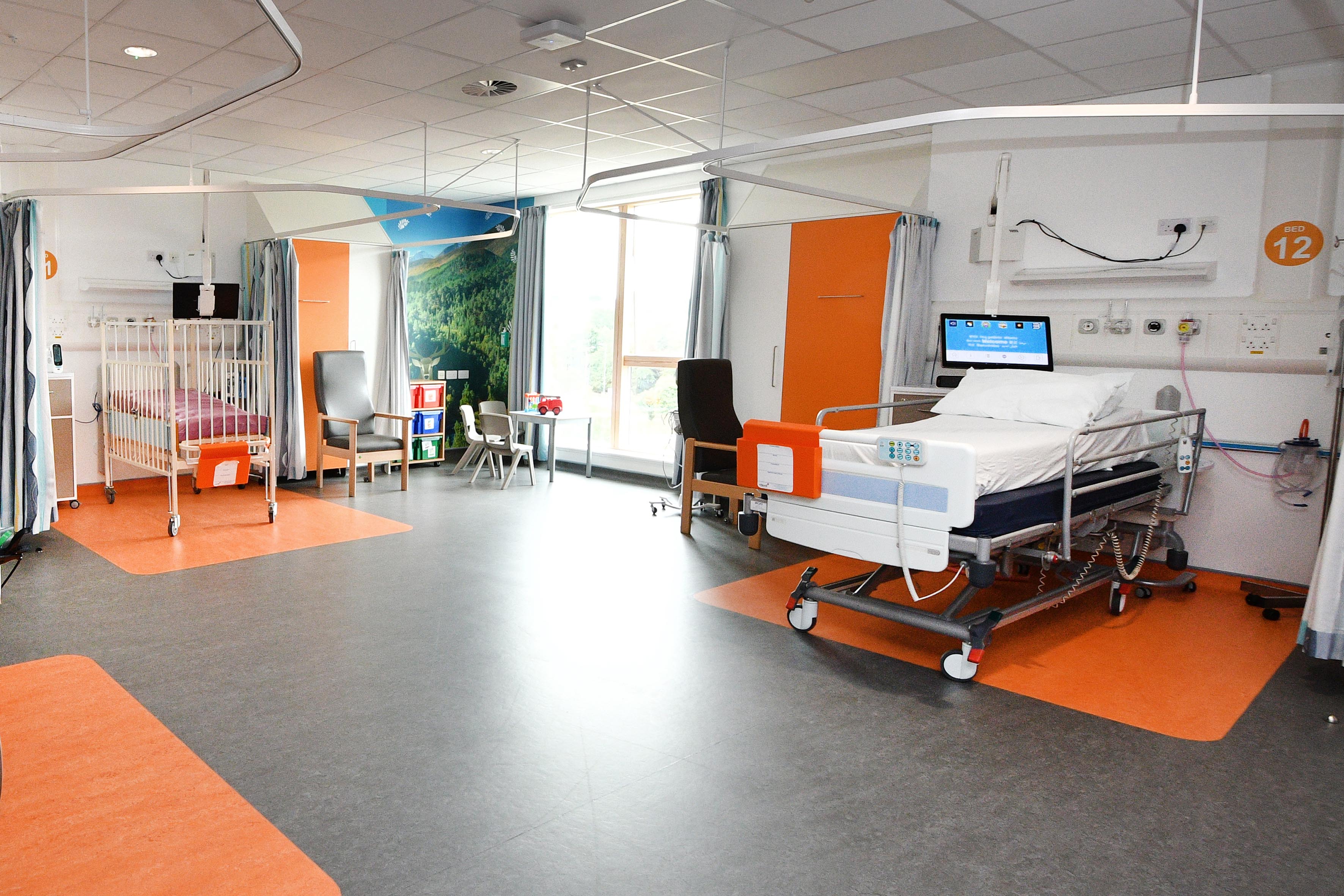
Children will either stay in a single room (with en-suite shower room) or a 4-bed bay, which has a toilet and shower room in the bay area. All children can have a parent, carer or family member stay overnight with them, with pull-down single beds next to each child’s bed or cot. There are separate toilets and washing facilities for family members staying overnight. The Family Sitting Room can be found on the same level as the Dalhousie ward, with comfortable sofas, a microwave for heating food and tea and coffee making facilities.

A vast room with big windows and two beds: one normal size bed and one for small children

There are ‘Welcome to Hospital’ booklets for children, available from the reception desk or the play specialists. They have puzzles, pages to colour in and space to keep track of who has been to see you on the ward or any tests and treatment. Please ask for a copy if you’d like one.

  • « Go to Previous Page
  • Page 1
  • Page 2
  • Page 3
  • Page 4
  • Page 5
  • Interim pages omitted …
  • Page 13
  • Go to Next Page »
NHS Lothian and EHCH logos
  • Facebook
  • Instagram
  • Twitter

More Information

  • About Us
  • Accessibility statement
  • Freedom of Information (FOI)
  • Disclaimer

Contact NHS Lothian

Main Switchboard: 0131 536 1000

  • About Us
Manage Cookie Consent
We use cookies to optimise our website and our service.
Functional Always active
The technical storage or access is strictly necessary for the legitimate purpose of enabling the use of a specific service explicitly requested by the subscriber or user, or for the sole purpose of carrying out the transmission of a communication over an electronic communications network.
Preferences
The technical storage or access is necessary for the legitimate purpose of storing preferences that are not requested by the subscriber or user.
Statistics
The technical storage or access that is used exclusively for statistical purposes. The technical storage or access that is used exclusively for anonymous statistical purposes. Without a subpoena, voluntary compliance on the part of your Internet Service Provider, or additional records from a third party, information stored or retrieved for this purpose alone cannot usually be used to identify you.
Marketing
The technical storage or access is required to create user profiles to send advertising, or to track the user on a website or across several websites for similar marketing purposes.
  • Manage options
  • Manage services
  • Manage {vendor_count} vendors
  • Read more about these purposes
Preferences
  • {title}
  • {title}
  • {title}