Dalhousie ward is on the third floor of the Royal Hospital for Children and Young People in Edinburgh, with a secure door entry system and buzzer. Dalhousie can be a very busy place and is where babies, children and young people are admitted and cared for by specialist teams or if they need a longer stay. There are many specialist teams caring for children in the Dalhousie ward including respiratory (lungs and breathing), diabetes, gastroenterology (also known as GI) and many more.
The transitional care unit is also based within the Dalhousie ward. This is an area for patients who need long-term breathing or airway support and will be in the hospital for a longer stay.
Phone Number: 0131 312 1330
Nurse in charge: Claire Sutherland
What can you expect?
The ward can be a very busy place. In Dalhousie, many patients are booked in to be admitted on a planned date, usually for investigations to be carried out throughout their stay. Other children might be brought to the ward to stay overnight after coming to another part of the hospital first, such as the Emergency Department or Castle Mey ward.
Nurses work in 12-hour shifts, with a handover taking place twice each day between the ‘day shift’ and ‘night shift’, usually around 7.30am and 7.30pm. It is normal to see a few different nurses, student nurses, nurse practitioners, doctors, consultants, physiotherapists, pharmacists and other specialists during your time on the ward. Everyone will be working together to plan the best care for each child, depending on the treatment that they need.
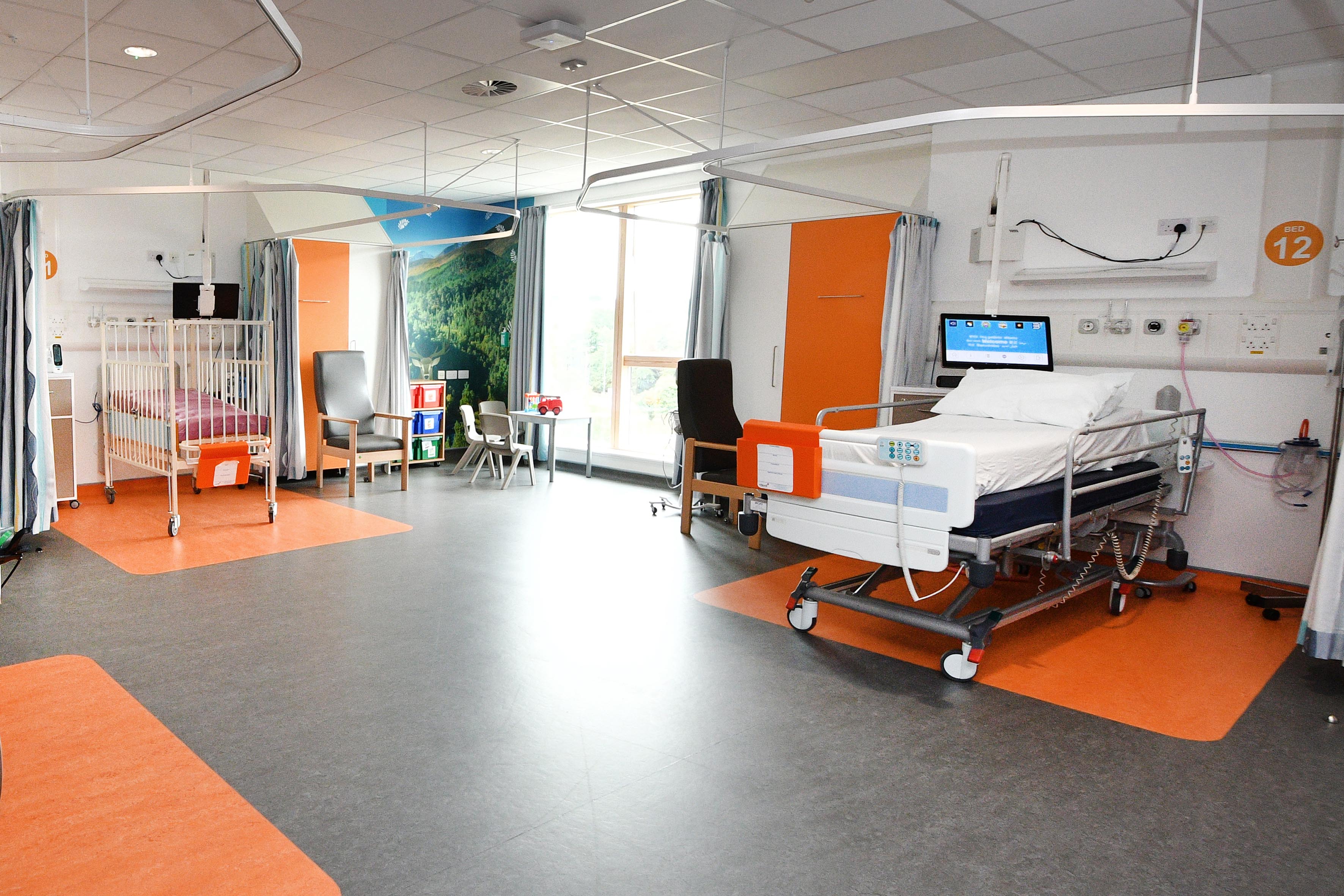
Children will either stay in a single room (with en-suite shower room) or a 4-bed bay, which has a toilet and shower room in the bay area. All children can have a parent, carer or family member stay overnight with them, with pull-down single beds next to each child’s bed or cot. There are separate toilets and washing facilities for family members staying overnight. The Family Sitting Room can be found on the same level as the Dalhousie ward, with comfortable sofas, a microwave for heating food and tea and coffee making facilities.
There are ‘Welcome to Hospital’ booklets for children, available from the reception desk or the play specialists. They have puzzles, pages to colour in and space to keep track of who has been to see you on the ward or any tests and treatment. Please ask for a copy if you’d like one.
Ward routine & meals
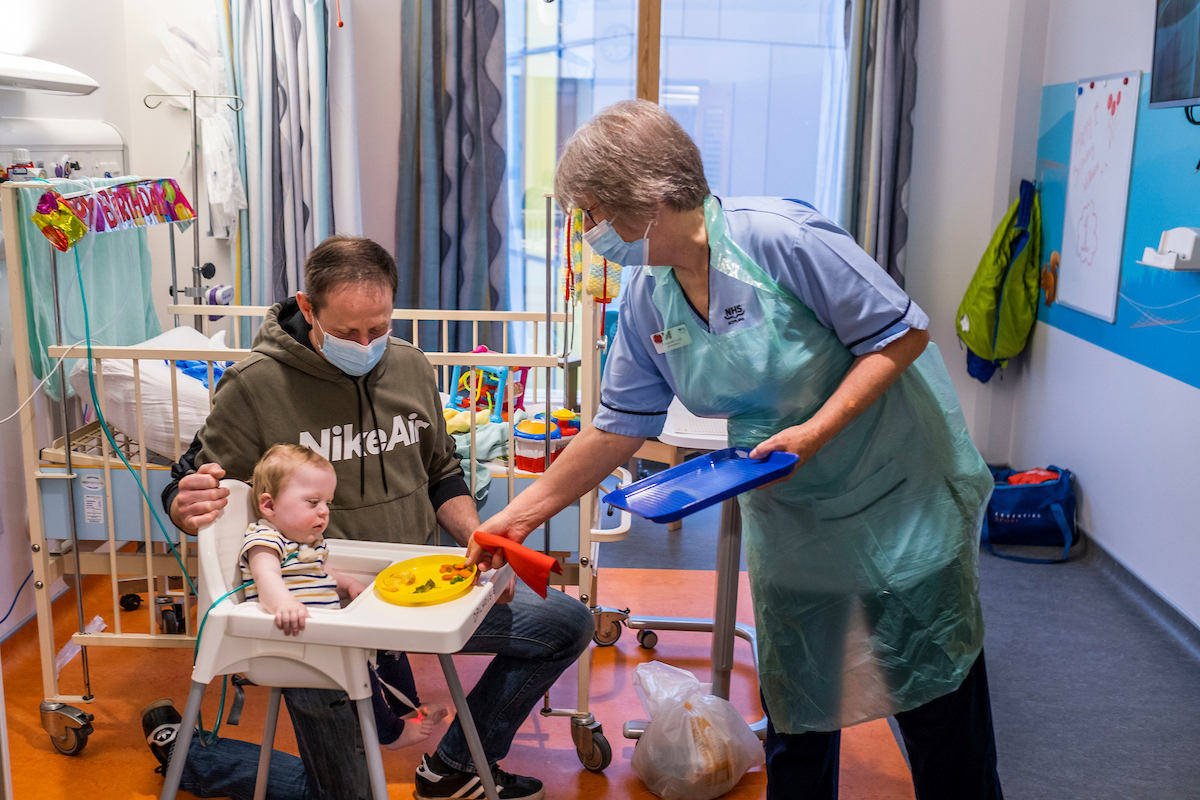 Although Dalhousie is a busy place, everyone on the ward will do their best to help patients sleep or get some rest at night, although some children might need medication or observation during the night as well as during the day. It is helpful if families can be considerate of others during the evening and at night, by keeping noise levels low, particularly from TVs, mobiles or tablets.
Meals are provided to children during their time on the ward, including:
Although Dalhousie is a busy place, everyone on the ward will do their best to help patients sleep or get some rest at night, although some children might need medication or observation during the night as well as during the day. It is helpful if families can be considerate of others during the evening and at night, by keeping noise levels low, particularly from TVs, mobiles or tablets.
Meals are provided to children during their time on the ward, including:
- Breakfast 8am: A choice of cereals, toast, yoghurts and fruit
- Lunch 12noon: Selection of hot meals and sandwiches
- Dinner 5pm: Selection of hot meals and sandwiches
Breastfeeding your baby
If a baby is still being breastfed, mothers are entitled to breakfast during their time on the ward. Fresh water or diluting juice is also readily available for breastfeeding mothers. Help is available with feeding or to express milk, with a fridge and freezer for storage.Tests, Scans & X-rays
It might be necessary to have some tests, scans or x-rays during your time on Dalhousie to find out more about what is making you unwell. This might include a blood test, different types of scan or an x-ray, which is like a photo of your bones and the inside of your body. Some children might be given medicine or fluids through a tiny needle in their hand. There are play specialists based in the ward during normal working hours who can help children prepare for a procedure and help distract them with play activities. While the ward is a busy place and things can change quite quickly at times, we will always be happy to explain what is happening and answer any questions that you might have.
Ward Rounds & Medicine rounds
Each speciality team will visit their patients on the ward to review. The team may arrive on the ward as a group including a consultant, registrar, junior doctor (a qualified doctor training to be a specialist), specialist nurse, dietician and sometimes a medical student. This can feel overwhelming, but families are always welcome to ask questions. Sometimes it can help to write questions down during the day or at night as you remember things you’d like to know more about, or if you feel something has changed. Medicine is given to children by nursing staff throughout the day. Nurses will wear red tabards to carry out drug rounds. This is to prevent interruptions and to help them concentrate on this very important task. If nurses are wearing a red tabard (a red apron), please do not approach them at that time and find another staff member if you need any help.Staying on Dalhousie Ward
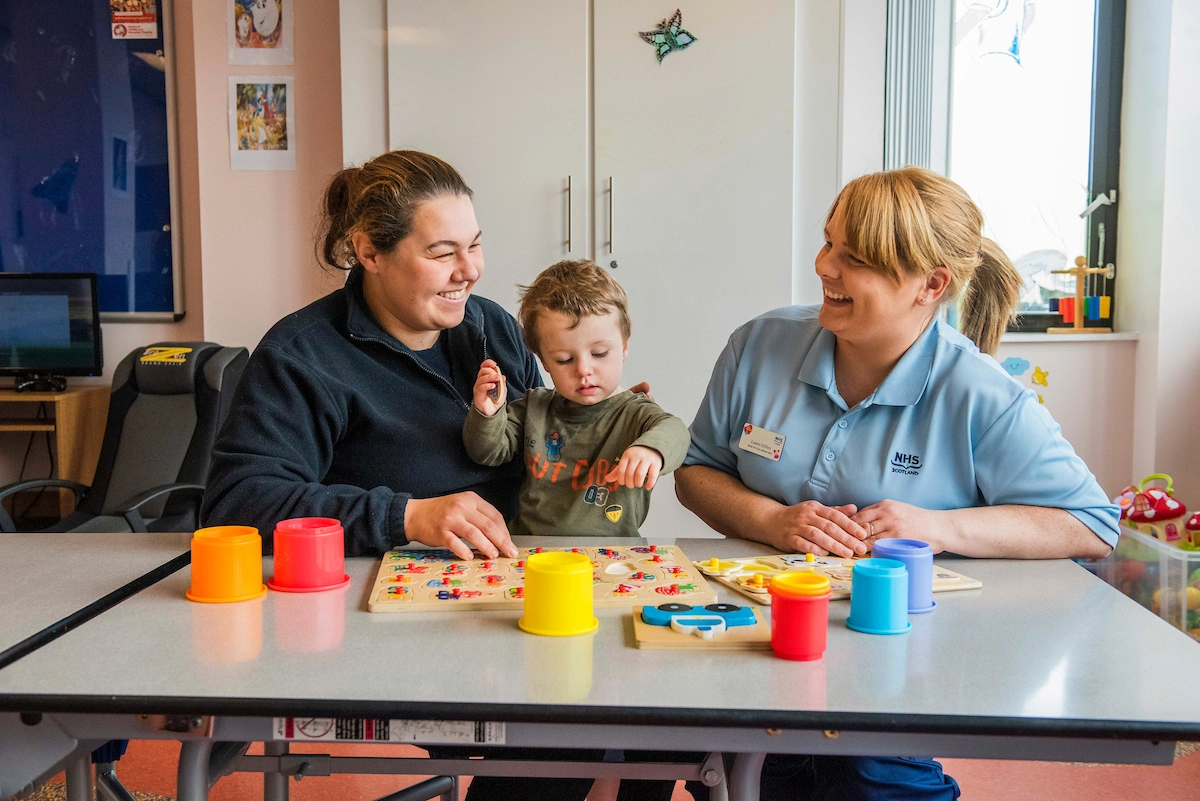 We understand that having a child admitted to Dalhousie can be a worrying and stressful time, particularly if your child has become unwell and the cause is not yet known. Each child’s bed has a single bed with mattress next to it, to allow you to get some rest and stay with your child. The Royal Hospital for Children and Young People has a café, shop and restaurant as well as vending machines available 24-hours a day for drinks and snacks. Find out about RHCYP facilities.
 Wifi
Wifi
Wifi is available for families to connect their mobile phones or tablets from home. Wifi codes are available from the nursing staff on the ward, or from one of the play specialists.
Family Support
Some families can find themselves admitted to Dalhousie after an emergency or at very short notice. If you need a supply of toiletries or any personal items, please speak to your child’s nurse as emergency care packs for families are available. Family support services include help with the unexpected costs of having a child in hospital, advice, support and someone to listen. The Family Support corridor is on the ground floor and open for families to drop-in during the week (Monday-Friday, 9am-4pm). Your child’s nurse can also help find the type of family support you need.Ronald McDonald House
Ronald McDonald house is a hotel inside the RHCYP, on the third floor (the same floor as Dalhousie ward).The House has 25 bedrooms and facilities, including kitchens, bathrooms and living areas for relaxing or taking time away from the ward. The new House has been funded and is run by Ronald McDonald House Charities, with dedicated staff based there to help families during a stay. There are a limited number of rooms available but Ronald McDonald staff will try their best to accommodate a family where possible. Priority is given to families where:- Their child is critically unwell and families need to stay close by,
- They live outside the Lothian area and would have a long distance to travel
- More than one parent or carer would like to stay nearby – or have younger siblings to care for.
Little France School
If your child is in Dalhousie for a long stay, they can be referred to the Little France School to continue their learning. This referral is completed by the ward play specialist, who will pass on information about your child’s age and school year. Little France School has a Headteacher (in a shared role across other units), as well as qualified teachers for primary and secondary school age children. The teacher can either visit your child’s bedside or, if they are well enough, your child can visit Little France School.Play specialists, playroom and balcony
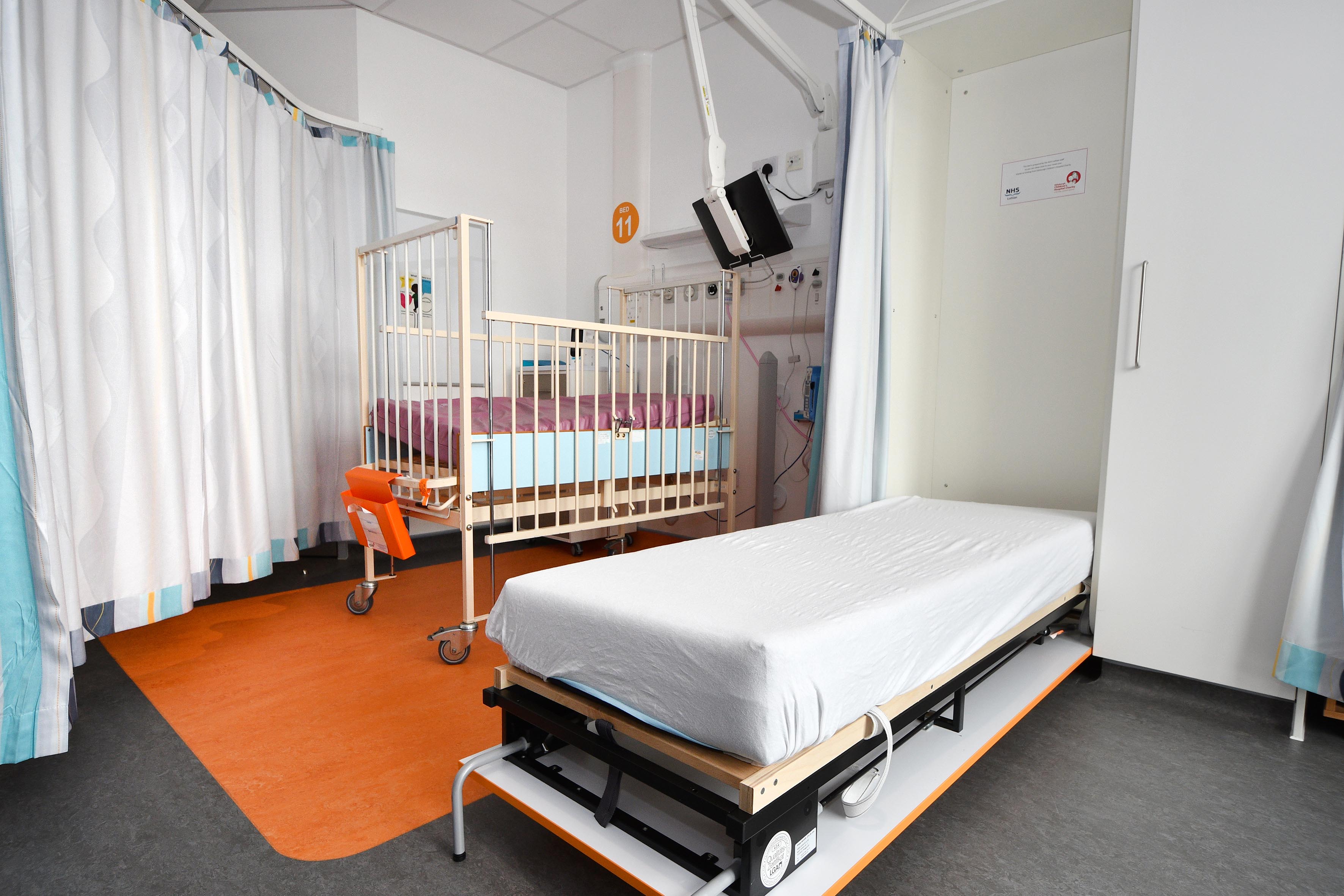
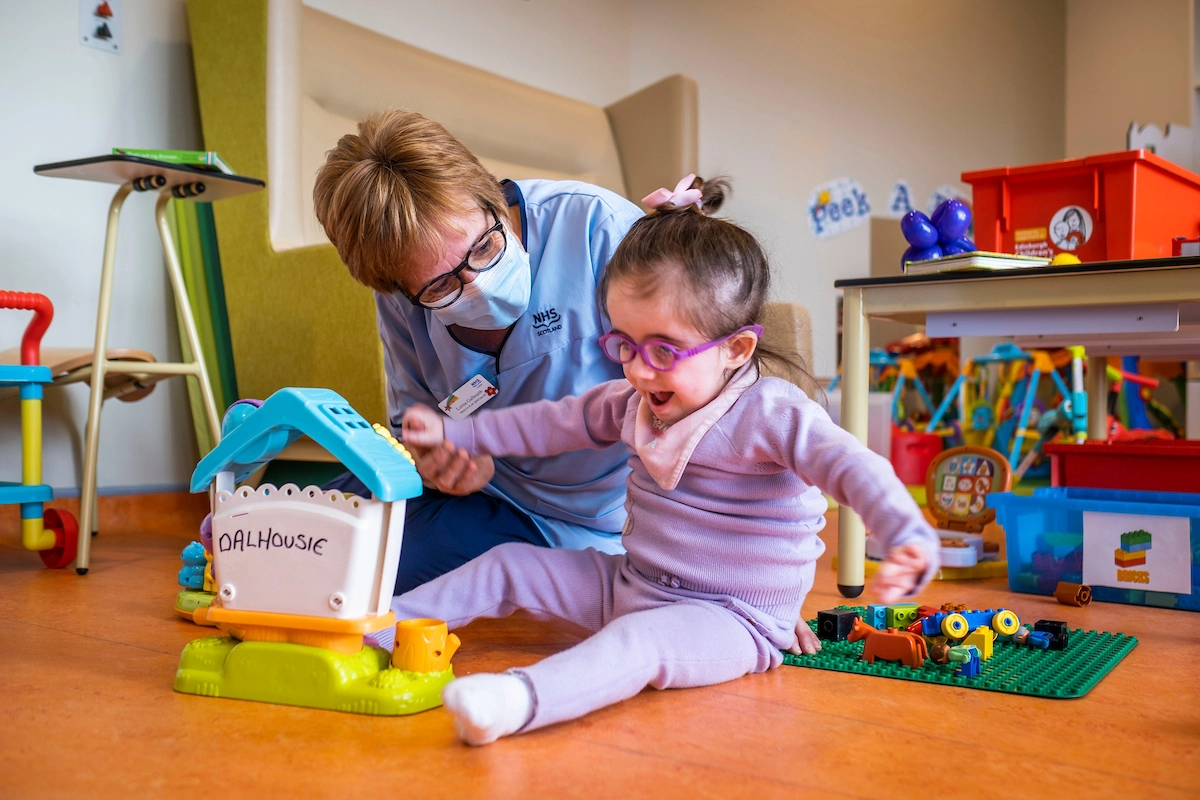 Our Play Specialist is Lorna. Sometimes other members of the play team help on the ward as well. Play specialists can help children understand and prepare for procedures, distract them with activities and have fun with toys, games and crafts. If you’d like help from the play specialist during your child’s time in Dalhousie, please ask the nursing team.
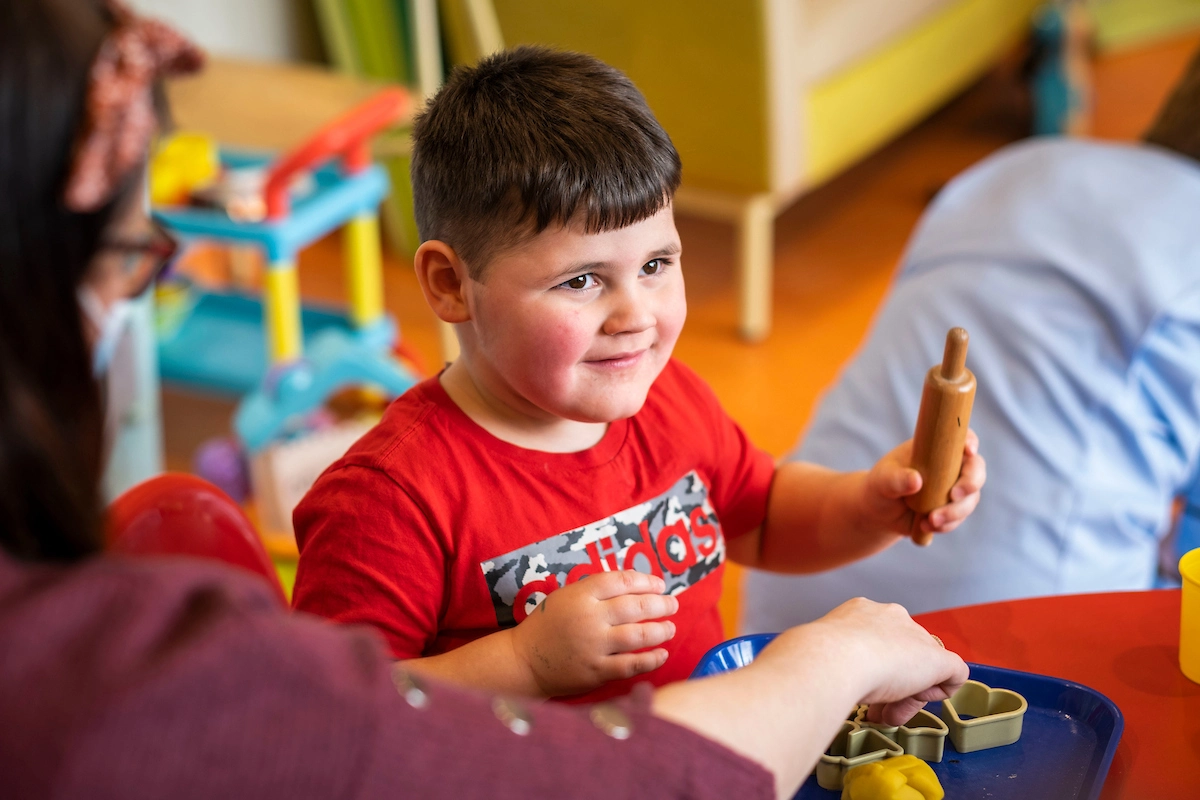
If they are feeling well enough, children can visit the play room where they will find toys, games, crafts and a range of activities for all ages. We sometimes have special visits from artists, dancers, magicians, musicians or storytellers through our hospital Arts programme, arranged by Edinburgh Children’s Hospital Charity and other partners.
There is also a gaming room on Dalhousie for young people aged 12+ which includes a range of activities (table tennis, games consoles etc), with a quiet, private study room opposite, for carrying out school work during a longer stay on Dalhousie. Please speak to nursing staff if you feel your child would like to spend time in these areas.
Dalhousie also has a balcony for patients to get some fresh air and play in a safe, outdoor space if they are feeling well enough. Please speak to your child’s nurse if you would like to spend time on the balcony.
Our Play Specialist is Lorna. Sometimes other members of the play team help on the ward as well. Play specialists can help children understand and prepare for procedures, distract them with activities and have fun with toys, games and crafts. If you’d like help from the play specialist during your child’s time in Dalhousie, please ask the nursing team.
If they are feeling well enough, children can visit the play room where they will find toys, games, crafts and a range of activities for all ages. We sometimes have special visits from artists, dancers, magicians, musicians or storytellers through our hospital Arts programme, arranged by Edinburgh Children’s Hospital Charity and other partners.
There is also a gaming room on Dalhousie for young people aged 12+ which includes a range of activities (table tennis, games consoles etc), with a quiet, private study room opposite, for carrying out school work during a longer stay on Dalhousie. Please speak to nursing staff if you feel your child would like to spend time in these areas.
Dalhousie also has a balcony for patients to get some fresh air and play in a safe, outdoor space if they are feeling well enough. Please speak to your child’s nurse if you would like to spend time on the balcony. Moving between rooms, bays and wards
 We aim to give the best possible care to all of our patients, at all stages of their illness or treatment, giving them the most appropriate levels of nursing or medical care. Sometimes, the best care for a child or young person might be in another part of a ward, a different ward, or a different hospital. For example, it might be necessary to move a patient to a different part of the RHCYP, to or from the children’s ward at St. John’s Hospital, or to a local hospital closer to home if you do not live in the Lothian region.
When a patient needs to be moved, the decision will be taken by the consultant responsible for their care. Wherever possible, parents or carers will be spoken to or contacted to let them know that a move is planned or needed.
We understand that being in hospital can be a stressful time for patients and their families and we will only move a child when it is absolutely necessary. Examples of why the decision to move your child might be made include:
We aim to give the best possible care to all of our patients, at all stages of their illness or treatment, giving them the most appropriate levels of nursing or medical care. Sometimes, the best care for a child or young person might be in another part of a ward, a different ward, or a different hospital. For example, it might be necessary to move a patient to a different part of the RHCYP, to or from the children’s ward at St. John’s Hospital, or to a local hospital closer to home if you do not live in the Lothian region.
When a patient needs to be moved, the decision will be taken by the consultant responsible for their care. Wherever possible, parents or carers will be spoken to or contacted to let them know that a move is planned or needed.
We understand that being in hospital can be a stressful time for patients and their families and we will only move a child when it is absolutely necessary. Examples of why the decision to move your child might be made include:
- Your child is being looked after by a specialist team and they would be most appropriately nursed on that specific ward.
- At certain times of the year we have high numbers of children with specific illnesses being admitted. Children who are stable may need to be moved to another ward, or to (or from) St. John’s Hospital. This allows emergency admissions or patients needing closer observation to be cared for in the best place for them.
Cubicles and individual rooms
Cubicles and individual rooms are given to patients that need them the most. There are two priorities for cubicles or rooms:- A child with a condition that makes them vulnerable to infection.
- A child who has - or may have - an infection that could pose a risk to other patients.
Visiting
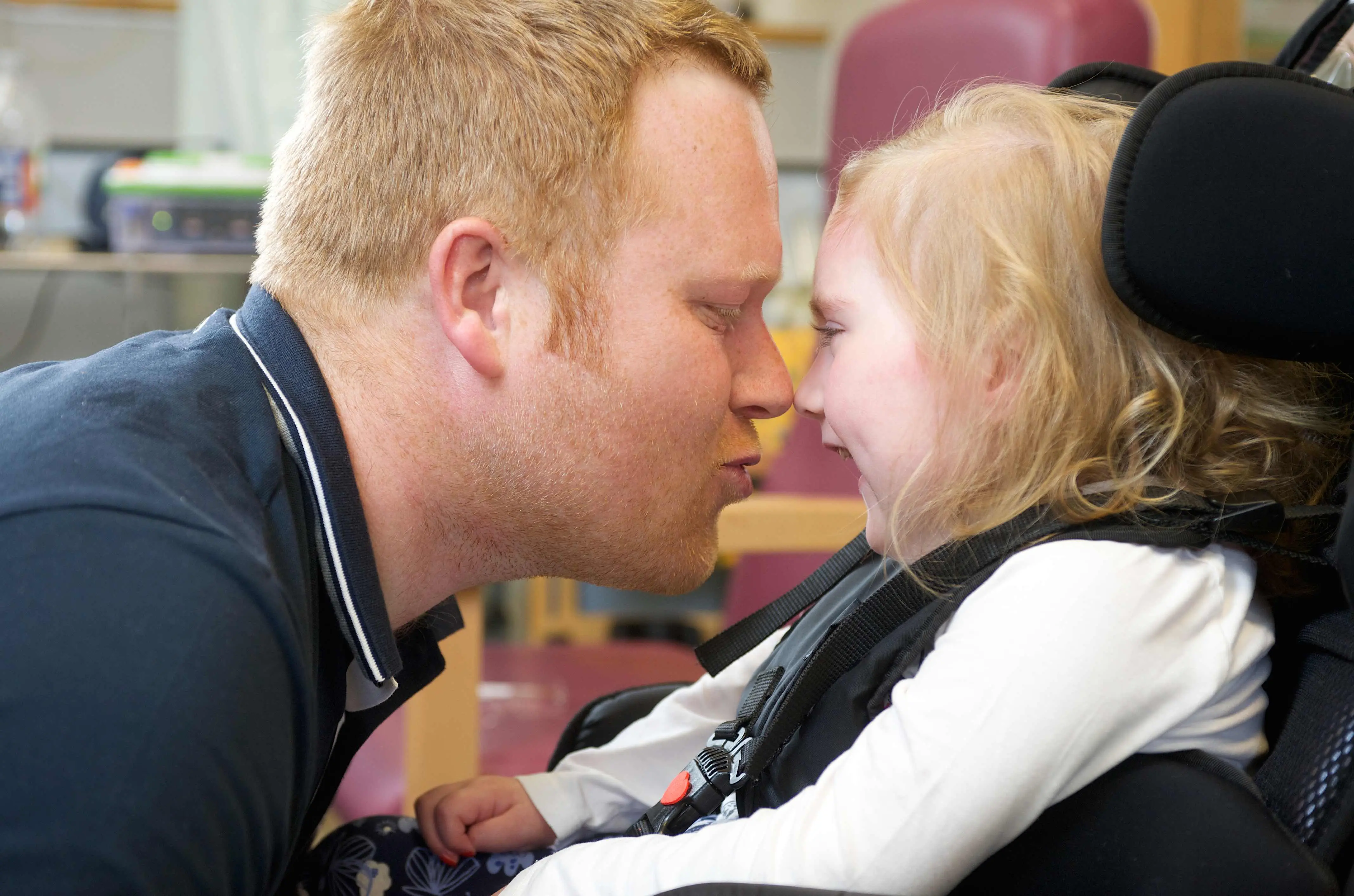 To limit the risk of infection, visiting is restricted to two visitors by a child’s bedside at any one time. Children under 5 are not allowed to visit the ward areas. Sometimes visiting guidelines need to change at short notice – please speak to the Charge Nurse, or nurse in charge of your child’s care if you have any questions. Thank you.
There is a family sitting room on the third floor that can be used for other visiting family members, as well as the Edinburgh Children’s Hospital Charity Hub, a family friendly space on the ground floor which is open to everyone and has a full programme of activities each day. If your child is well enough, you may be able to take your child to other parts of the hospital for a short period of time. Please speak to the nurse in charge if you would like to talk about this.
To limit the risk of infection, visiting is restricted to two visitors by a child’s bedside at any one time. Children under 5 are not allowed to visit the ward areas. Sometimes visiting guidelines need to change at short notice – please speak to the Charge Nurse, or nurse in charge of your child’s care if you have any questions. Thank you.
There is a family sitting room on the third floor that can be used for other visiting family members, as well as the Edinburgh Children’s Hospital Charity Hub, a family friendly space on the ground floor which is open to everyone and has a full programme of activities each day. If your child is well enough, you may be able to take your child to other parts of the hospital for a short period of time. Please speak to the nurse in charge if you would like to talk about this.
Time off the ward
Some children & young people are admitted to Dalhousie for a longer hospital stay but are well enough to be off the ward for short walks, a daily pass (time at home) or to attend school. This is a decision made by your lead consultant. If you would like to have time off the ward please discuss this with the nurse in charge or your child’s lead consultant on the next daily ward round.Going home
Many children and young people are well enough to go home after a stay on Dalhousie.Families might be given a supply of medicine to take home with them or a prescription to take to their local pharmacy. Sometimes a follow-up appointment might be arranged for a check-up or review with the doctor. A letter will be sent to your family doctor to let them know about your child’s admission to hospital and the reason for their stay. If you need a copy of the discharge letter (for example for a parent’s work or for insurance reasons) please ask the team on the ward before you leave.
