
Patients, parents and carers
Asthma
What is asthma?
- Asthma is a common problem affecting one in eleven children in the UK
- Asthma affects the airways and lungs. The tubes in the lungs (airways) become inflamed (swollen) and blocked, making it harder for the air to move in and out
- Asthma causes difficulty breathing and cough which is often worse at night and in the early morning. Many people with asthma feel chest tightness and pain when their asthma is bad.
Why do the airways narrow?
- The lining of the airways becomes inflamed and swollen
- The muscles in the airway wall tighten
- Sticky mucus (phlegm) clogs the airways
Watch the Moving On Asthma video to learn about young people living with asthma. This video is designed to help develop essential self-management skills and provides information on how to access healthcare independently.
What can trigger asthma?
Asthma can be triggered by lots of different things. Some common triggers include:
- Viral infections, e.g. common coughs and colds
- Irritants such as tobacco smoke (either you smoking, or somebody else smoking around you), vaping and pollution
- Allergies such as to dust, pets and pollen
- Exercise
- Emotion, e.g. excitement
- Climate, e.g. sudden change in weather
- Medications e.g. aspirin
What is an asthma attack?
An asthma attack is where asthma gets worse and the normal treatments aren’t working as normal. People having an asthma attack often have a tight chest and find it difficult to do normal activities such as walking and talking. An asthma attacks are dangerous and should never be ignored. Things can get worse and people may need to come to hospital.
What causes asthma?
Nobody knows the exact cause of asthma, but we know that it often runs in families and certain people are more likely to have asthma, for example those with other allergic conditions like eczema.
Can you grow out of asthma?
Asthma gets better and worse over time. It is difficult to say if you will grow out of it. Some people noticed their asthma is less intense as they get older, but it doesen’t usually doesn’t go away completely.
Can asthma be treated?
Asthma can be easily treated and most people live a normal life. The treatment will depend on how bad your asthma is and may change from time to time. Asthma attacks are the most dangerous times. The main aim of treatment is to prevent attacks and also to keep daily symptoms to a very low level.
There are two main types of inhaler used to treat asthma:
- Preventers (brown/grey/purple): These are maintenance inhalers taken every day, even when well. They prevent asthma symptoms from occurring. Preventer medicines are usually steroids which are very effective but do not work immediately. It may take a few weeks after starting treatment to feel better. For this reason, preventers need to be taken every day, even if there are not symptoms.
- Relievers (blue): These are used to relieve symptoms if they start.
- Sometimes preventers and relievers are combined in the same inhaler. This treatment is called MART (maintenance and reliever treatment) which means whenever a reliever dose is taken, there is a longer term preventer dose taken at the same time.
How to use a pMDI inhaler with a spacer – tidal breathing | Asthma + Lung UK
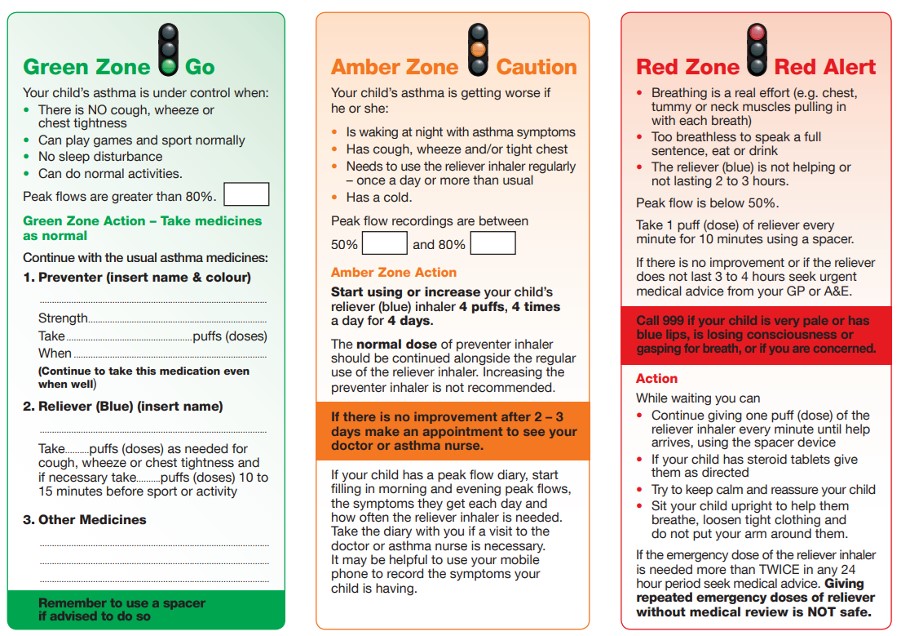
Every young person with asthma should have a personalised action plan to help them to know what to do and when to seek help if their asthma flares.
How will asthma affect my lifestyle?
Most people with asthma stay well and their day to day activities are not affected. You can help to ensure your asthma is well controlled by taking your medications as you have been shown and trying to avoid things that you know trigger your asthma. Exercise is important, and although this can sometimes make you wheezy, you can prevent this by using your reliever (blue) inhaler before you start. If you find that exercise is too difficult because of wheeze or breathlessness, you should speak to your doctor or asthma nurse for advice.
What can I do at home to help my asthma?
- Take your medicines regularly as shown
- Make sure you always have a good supply of your medicines, so that you don’t run out
- Avoid triggers where possible
- Make sure you have your asthma action plan handy (it might be helpful to take a picture of it to have on your phone)
- If you notice that your symptoms are getting worse, speak to your GP or asthma nurse specialist for advice – keeping a diary can be helpful to identify triggers
What do I do if I get a cold?
Colds are the most common trigger for people with asthma. During a cold you may need to use your reliever (blue) inhaler regularly – your asthma action plan will help to guide you during this time.
What is a severe asthma attack?
During a severe asthma attack your breathing will feel very difficult and you may be too breathless to speak in full sentences. You should follow your asthma action plan if you feel this way, and if the initial steps do not help, you should give an emergency dose of your reliever inhaler and seek urgent medical help.
The emergency dose of your reliever (blue) inhaler is 10 puffs through a spacer device (if available). You should breathe 8-10 times after each puff and wait 30 seconds in-between each puff. If you have given this dose of medication you must seek urgent medical help.
If your child cannot talk, is gasping for breath or has a colour change, you must phone 999 for an ambulance and continue to give 1 puff of their blue inhaler every minute until help arrives.
Other leaflets


