
Normal lower limb variants in childhood
Normal lower limb variants in childhood
Flat Feet – What are they?
Most adult flat feet have an arch along the inside edge of the foot, some higher than others. A foot is described as flat when this arch is absent or reduced in standing. All children have very flat feet when they first start walking.
As they grow and walk, the soft tissues along the bottom of their feet tighten and get stronger which gradually shapes the arches of the feet.
Children with flexible flat feet often do not begin to develop an arch until the age of 5 years or older, and the foot arch is not fully developed until around 10 years of age.
Some children never develop an arch and are never symptomatic.
When to seek help
If your child appears to be in pain or you feel their function is being affected.
Intoeing and Outtoeing – What is it?
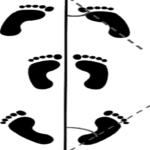
A child is said to have an in-toeing gait when they walk with their feet turned inwards.
A child is said to have an out-toeing gait when their feet turn outwards when they walk.
Both patterns in most cases are completely normal as we all have different walking patterns.
For more information please refer to the APCP Intoeing gait leaflet.
Knock knees/Bow legs – What are they?
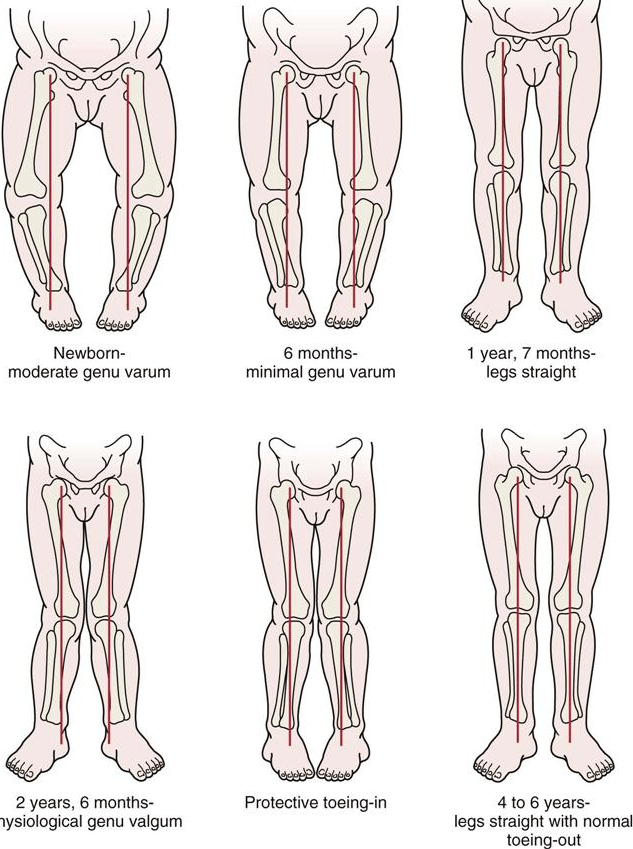
As all children develop, their legs change shape and position. All infants have some degree of bow legs which usually resolves by the age of 2.
By the age of 4, they begin to develop knock knees and this usually resolves to straight legs by the age of 8.
A slight degree of bowing or knocking is normal.
Bow Legs (or genu varum) – When a child stands with their feet together and there is a gap between their knees. This is particularly noticeable when a child starts walking but resolves spontaneously with normal child development.
Knock Knees (or genu valgum) – When a child stands with their knees together and there is a gap between their feet. Knock knees usually resolve spontaneously although a mild degree of genu valgum is normal and sometimes persists into adulthood.
Treatment Splints, insoles and exercises do not have any effect on knock knees or bow legs. It will resolve with normal development.
When to seek help
If your child has one leg that is significantly worse than the other, severe or worsening deformity or a history of trauma or infection.
