Respiratory specialists look after children and young people with conditions affecting their breathing, lungs or airway. Some patients with respiratory (or breathing) conditions might also be treated by other doctors and nurses teams, depending on their wider health. These pages including information about who we are, what we do and some of the most common conditions that we treat.
Along with well-known conditions like asthma, we also care for patients with several associated conditions:
- Preschool episodic wheeze and multi-trigger wheeze
- Exercise-induced breathing difficulties
- Inducible laryngeal obstruction
- Breathing difficulty associated with anxiety and stress
Clinics
Weekly clinics are run by a team of consultants, specialist nurses, physiologists and physiotherapists for a range of common breathing conditions across the Lothian area, including at the RHCYP and St. John’s Hospital in Livingston.
A typical clinic schedule might look like this:
Wednesday morning: Nurse Specialist clinic, RHCYP
Wednesday afternoon: Consultant-led multidisciplinary clinic, RHCYP.
Thursday morning: St John’s Hospital clinic.
Friday morning: Nurse specialist clinic
Additional appointments can be arranged for children and young people with an urgent need to be seen.
Get in touch
Main Respiratory Service phone number: 0131 312 0453
Clinics & Coronavirus
To keep our service running whilst maintaining social distancing, a combination of face-to-face consultations along with NearMe (video calls) and telephone calls are offered. Patients needing lung function tests and home spirometry are visited by appointment.
Common breathing problems
Tests & Investigations
Asthma
Meet the team
Nurse Specialists:
Ann McMurray Julie WestwoodConsultants:
Florian Gahleitner Don Urquhart Stefan Unger Kenny Macleod Dave ArmstrongGet in touch
For general enquiries call the main Respiratory service on 0131 312 0453. Email: asthmanurses.rhsc@nhslothian.scot.nhs.ukComing to a clinic
Asthma clinics can take place over a video call or by phone and in the hospital. They are to make sure you are healthy and to check whether you have any new breathing problems. If you are asked to come to the hospital, you can bring a parent or other carer to help you. Clinics usually take place in our Outpatients Department. First, a nurse will meet you and check your name, after which your weight and height will be measured to see how you have grown. You might be asked to do some blowing tests. We will talk with you about your asthma and check your medicines. We might also listen to your chest with a stethoscope and examine the rest of you to check you are well. Sometimes we do some other tests, like blood tests or skin prick tests, to get a full picture of what is happening inside your body. You can find out about these on the allergy department Opens in new window page. If you like, you can ask us some questions. You might want to write any questions down and bring them to the clinic, so you don’t forget. Once we have made a plan with you and your parent or carer, you will be able to go home. If you feel unwell during the clinic, we might ask you to stay in a hospital ward, but this doesn’t happen very often. You can find out more about staying in the hospital. Opens in new windowFurther help and information
More about asthma Opens in new window Asthma in children Opens in new window What to do if my child is having an asthma attack Opens in new window Help with self-management Opens in new windowTransition to adult services
At some point, you will need to transfer your care from the paediatric (or children’s) side to the adult side. This is called transition. Transition is a gradual process where you slowly take more control of your own health and the medications you need. It can be not easy to get used to, but it’s good to talk about it early on with your parents or carers and the hospital team. Some young people with asthma don’t need to keep coming to the hospital clinic once they reach school. Your GP and practise nurse can take continue your care. Some young people will have their care transferred over to the adult asthma clinic. We usually do this over one or two appointments where both the children’s team and an adult asthma doctor are there simultaneously. We hope this helps you to feel more at ease with transitioning. It is often a good time to really think about your asthma and what is most important to you by asking questions and discussing options. We are always happy to help.Cystic Fibrosis
Breathing support & Ventilation
Breathing problems may be discovered after birth, can be something that develops over time or due to an infection or accident. WellChild Respiratory Clinical Nurse Specialists (CNS) provide essential care and practical support to children and young people with exceptional health needs and families. They play a crucial role in enabling children to leave the hospital and be cared for at home, reducing the practical, emotional and financial impact for families. There are two WellChild Nurse Specialists helping children and young people across the Lothian area, the wider South-East of Scotland and Tayside regions whose long-term and complex health problems mean they need medical support for their airway and or breathing.
What we do
We support children and young people with nasopharyngeal airways (NPA), Tracheostomies, respiratory support via (mask) non-invasive ventilation and tracheostomy (invasive) long-term ventilation both in the hospital and in the community, giving families continuity during the hospital admission and ongoing outpatient follow-up.
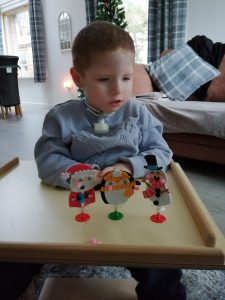
WellChild Nurse Specialists are part of the Respiratory team, supporting families by working closely with colleagues in the community, hospitals, hospices and other specialist centres. We also work in partnership with the wider multidisciplinary team (a group of departments and specialists working together) to support children and young people getting ready to be discharged, help patients within community settings and prepare older children to transition into Adult Services.
Training and support
Once a patient is getting ready to leave the hospital, their care is planned with a range of doctors and other departments, including the family. An important part of what we do is give the training to ensure a young patient can be cared for safely at home and in the wider community. Families are taught how to care for their child, giving parents and carers the knowledge and practical skills while building confidence to safely care for their child. Specialised support is also available for families if they have a concern or need advice.
Continued support
Families can benefit from ongoing support through outpatient appointments, sleep studies, home visits and telephone support. Our role is varied and changes depending on the children’s needs and young people in our care. Examples of the services provided include:
- Supporting the discharge home of the child or young person with NPA or tracheostomy
- Providing airway and respiratory training for parents, families and the team looking after a young patient.
- Supporting the discharge home of children dependent on ventilator support.
- Advising on complex care packages.
- Planning individual ventilation escalation plans.
- Establishing a child or young person on portable ventilators.
- Producing ventilator weaning plans
We also give specialist advice and information about a patient’s airway and respiratory conditions to everyone involved in their care, including the young person themselves.
To give the best possible care, the WellChild Respiratory CNS works together with teams in neonatal units, intensive care, high dependency units, colleagues looking after patients on other wards, outreach services, home care providers, community nursing teams, local hospitals, children’s respite units and hospices, adult sleep and home ventilation services.
Types of breathing support
What is CPAP?
CPAP (Continuous Positive Airway Pressure) is a type of respiratory support therapy used to overcome airway obstruction. The air is given to a child through a mask attached to an electrically powered machine called a CPAP driver. The mask (nasal, face or prongs into the nostrils) is held in place by a little cap (headgear) or straps.
What is Bi-Level Ventilation?
Bi-Level ventilation (BIPAP) is breathing support that assists your child’s ability to breathe. It involves the use of a mask and a BIPAP ventilator. The ventilator blows pressurised air through a mask into the airway and lungs. This will open up the airway to allow normal breathing to occur.
The machine is to improve a child’s quality of life rather than to provide life support. The BIPAP ventilator supports each child’s breathing pattern. If they cannot take a deep enough breath to fill their lungs and allow normal breathing to occur adequately, the BIPAP machine will support their breath and ensure the lungs are given enough air to allow normal breathing.
Normal breathing is important as it allows the body to take in enough oxygen to meet its needs and allow carbon dioxide (a waste gas) to leave. Bi-Level therapy’s pressure is delivered at two levels – inspiratory (breathing in) and expiratory (breathing out) pressure. The pressure increases when breathing in and decreases when breathing out.
What is a Nasopharyngeal Airway?
A modified NPA is a soft plastic airway tube cut to an individual child’s requirements and the prescribed size for each young person. It is inserted into the nasal passageway and aims to bypass upper airway obstruction at the level of the nose, nasopharynx or base of the tongue. It acts as a splint that keeps the tongue from falling back and blocking the airway.
What is a Tracheostomy?
A tracheostomy is an opening created at the front of the neck so a tube can be inserted into the windpipe (trachea) to help a child breathe. This will need an operation to perform the opening to insert the tube. The tube can be used to help clear airway secretions that might have built up in the throat and windpipe. If necessary, the tube can be connected to an oxygen supply or a breathing machine called a ventilator.
“Thea was born with a genetic condition causing all her muscles to be very weak. She was intubated at birth and it soon became clear that this was going to be a longer-term situation.
It felt like the end of the world. The hospital suggested a tracheostomy as a route to get our girl home. It was daunting learning to care for Thea but our WellChild respiratory nurse specialists were there at every step to make sure we felt comfortable.
Its amazing the routine just embeds in your life and now Thea has been home 3 years and attends a nursery (with support) and is getting stronger all the time.”
Lynsey Scott – mother of Thea
Website Opens in new window || Email || Facebook Opens in new window || Twitter Opens in new window || Youtube Opens in new window || Instagram Opens in new window
Contact
Sleep Clinic
Meet the Team
Head of Paediatric Cardiac, Respiratory and Sleep Physiology: David Fynn Specialist Paediatric Respiratory & Sleep Physiologists: Sarah Blacklock Emma Carruthers Jody Forster Kirsty Thompson Laura Hill Kellie Moffat Respiratory Physiology Support Workers: Janet Singh Claire Livingstone Elaine Grant Paediatric Respiratory and Sleep Physiology Administrator: Taylor Gilchrist Get in Touch You can reach the team on 0131 312 1124, Monday to Friday 8:30am-4:30pm (Excluding Public Holidays) By e-mail: Paed.Resp.Physiology@nhslothian.scot.nhs.ukComing to a clinic
Appointments take place in the Outpatients Department on the ground floor of the RHCYP. The Sleep Laboratory is located in Kildrummy Ward, which can be found next to Dalhousie Ward on Level 3. Tests & Checks During appointments, it might be necessary to have some tests to help doctors understand how well a patient’s lungs are working and their effects. Your doctor will explain any tests to you, and there will be a chance to ask questions. Tests occur in the hospital, with fully-trained staff who can make sure patients are safe and well looked after. Some of the tests that might be needed include: Breathing Test (also called Pulmonary Function Test) https://youtu.be/Zgx1_inGTjs Skin Prick Test https://youtu.be/8QvH6F6sHsQ Cardio-Pulmonary Exercise Test: a test to check how your heart and lungs work together during exercise. https://youtu.be/vWXWkyq_QN8 Exercise-induced Bronchoconstriction Test: a test to see how your airways work during exercise. Hypoxic Challenge: a test to check how your body absorbs oxygen. https://youtu.be/3cxubDl3PCU Sleep Studies There are a few different types of sleep study that might be carried out: Sleep Study on the ward as an in-patient Home Sleep Study Opens in new window Actigraphy Study Opens in new window What, Why Children in Hospital is a Scottish-based charity that produced films to help children and young people understand more about tests and treatment that they might have. You can watch with your child before their visit or appointment and note any questions you have for the doctors or nurses. Sleep Test (CP) Cardio Pulmonary Opens in new window Sleep Test (PS) Polysomnography Opens in new window In-Patient Sleep Study If your child is coming for a Sleep Study at RHCYP, here is some helpful information about their stay. What do I need to bring?- Your child’s admission letter
- All your child’s medication
- Overnight bag (Toy/toiletries/pyjamas or T-shirt & shorts – not onesie’s)
- Anything that will help your child relax is a favourite toy, book, game, DVD, or teddy bear.
- IF YOUR CHILD IS ON CPAP OR Bi-LEVEL VENTILATION, PLEASE BRING ALL THEIR EQUIPMENT
