The allergy service provides specialist allergy care for children and young people in Edinburgh and the Lothians who have an allergic disease, for example, food allergies, asthma, eczema and hay-fever. With our treatment and support, we aim to make life with an allergy easier for children, young people and their families.
Our allergy team consists of the professor of Child Life and Health and paediatric allergist, paediatric consultants with a special interest in allergy, two allergy nurse specialists and an allergy dietitian. We look after patients of all ages across the NHS Lothian region.
What is an allergy?
An allergy occurs when the body’s defence system reacts to things that are usually harmless to most people. These things, called allergens, might include peanuts, tree nuts, egg, milk, pollen, house dust mite, pets, or some medications. When a person comes into contact with an allergen, it can cause mild to severe reactions.
Allergies can cause asthma, eczema, hay fever and reactions to foods, drugs or other allergens. There are 2 different types of allergy:
- Immediate type – where a person develops symptoms very quickly after being in contact with the allergen.
- Delayed type allergy – where the reaction can take 24-72 hours to develop.
We usually treat patients with immediate-type allergy; however, some children and young people have a combination of both types.
Coming to clinic
Our referrals come from family GPs or other health professionals from around the NHS Lothian area. Most patients are seen in an outpatient clinic by a doctor, specialist nurse, or dietitian experienced in managing patients with allergy. We aim to give a complete allergy evaluation in one clinic appointment, which might take up to two hours.
Children and young people will be asked a variety of questions about their allergy and general health and questions about family health and diet. We ask these questions to help decide whether allergy testing is needed and to inform our recommendations for managing any allergies.
Allergy Testing
Types of allergy tests include skin prick tests and blood tests. Your consultant or nurse specialist will decide which tests your child needs. Once a diagnosis is confirmed, a plan to manage the allergy and the treatment will be created. The specialist nurses can offer practical advice about managing allergies at home, at school, eating out safely etc., as well as training to use any medications and devices (if needed). A dietitian might be asked to provide helpful information regarding your child’s diet as well.
Wherever possible, we try to complete allergy testing on the same day as your initial appointment. If this isn’t possible, you may be asked to return at a later date for testing.
Skin Prick Test
A skin prick test is a safe and simple test for immediate-type allergies, which helps us work out what is causing an allergic reaction. To do the test, a nurse will mark some letters on the forearm’s inner part and place a small droplet of different solutions next to each letter. Each solution contains a diluted extract of the substance – for example, peanut. A tiny prick is then made through each droplet – a bit like being pressed with a ballpoint pen, and then the solution is wiped off. After 15 minutes, the results are ready to read.
Skin only reacts if the test is positive – a skin prick test will not cause the same reaction experienced when eating or being in contact with the allergen. If positive, a white itchy spot (often called a wheal) will appear, measured and recorded. The wheal size helps us work out which of the foods are likely to cause a reaction. It does not tell us how severe the reaction will be.
Watch what a skin prick test involves:
Before coming to your appointment
- If you take antihistamine medication, this must be stopped for 5 days before coming to your clinic appointment as this medication can interfere with allergy tests. If this will be difficult, please contact the allergy team, and advice can be given.
- If your allergy might be caused by a less common food, or a fruit or vegetable, we ask for these to be brought with you to be used during testing.
- If an asthma inhaler or spacer device is used, we ask that these are brought to the clinic so that the inhaler technique can be checked and the correct device given for each allergy.
Blood Tests
Blood tests are sometimes used to help diagnose an immediate-type allergy, but they are not always needed. You can read more about having a blood test.
Reintroducing foods at home
Children may outgrow certain food allergies, most commonly eggs and cow’s milk, so a time will come when the food can be reintroduced back into the diet. The allergy team will decide the most appropriate time to start this, usually at home with our support. Support and advice will be given before to prepare families, with detailed written information.
Allergen Challenge
Sometimes allergy tests don’t give a clear answer about whether a child or young person has a specific allergy or if the allergy has resolved naturally. A food challenge might be carried out in a hospital under medical supervision, involving exposure to the allergen (e.g. food, medication, latex) to see whether a reaction occurs.
In a food challenge, items are given in stages until a full portion of the food is managed without developing symptoms. The test usually takes about five hours, and our specially-trained team will make sure patients feel relaxed and try to make it fun.
Watch this video to see what an allergen challenge is usually like.
Immunotherapy
Some young patient can benefit from pollen immunotherapy. Sometimes called desensitisation treatment, it can be used for severe hay-fever symptoms such as a runny nose, sneezing, itchy eyes, which do not improve with medication.
Immunotherapy involves injections of increasing amounts of pollen solution under the skin before hay-fever season starts. This can teach the body’s defence system to accept the pollen without causing hay-fever symptoms. Immunotherapy is a big commitment, with six weekly visits every year for three years to maintain protection. The treatment becomes more effective over time.
Immunotherapy injections are given in the hospital for safety and reassurance. Patients are observed for an hour afterwards to ensure there is no reaction. The most common effects are some discomfort around the injection site on the arm.
Life with an allergy
Some children and young people with a simple food allergy may only need a single appointment for diagnosis and future management advice. Others with more serious or complex allergies may need regular appointments at the allergy clinic as they grow up and into their teenage years.
If allergies are quite stable with no change, invitations to clinic appointments may only be needed every year or two. The allergy team can always be contacted for advice or in case of a change.
Mary’s story
Mary has been looked after by our Allergy Service for several years. Watch as Mary’s mum Jenny tells us about life with Mary’s allergies, starting school and their experience of needing to use an adrenaline device.
Laila’s Story
Laila’s mum noticed that Laila was having reactions to some types of food while she was weaning as a baby, especially foods like lentil soup, or recipes containing peas and beans.
Laila has a less common allergy to a type of pea protein, meaning that she has to be particularly careful when eating out and checks ingredients really carefully in restaurants, shops or at parties.
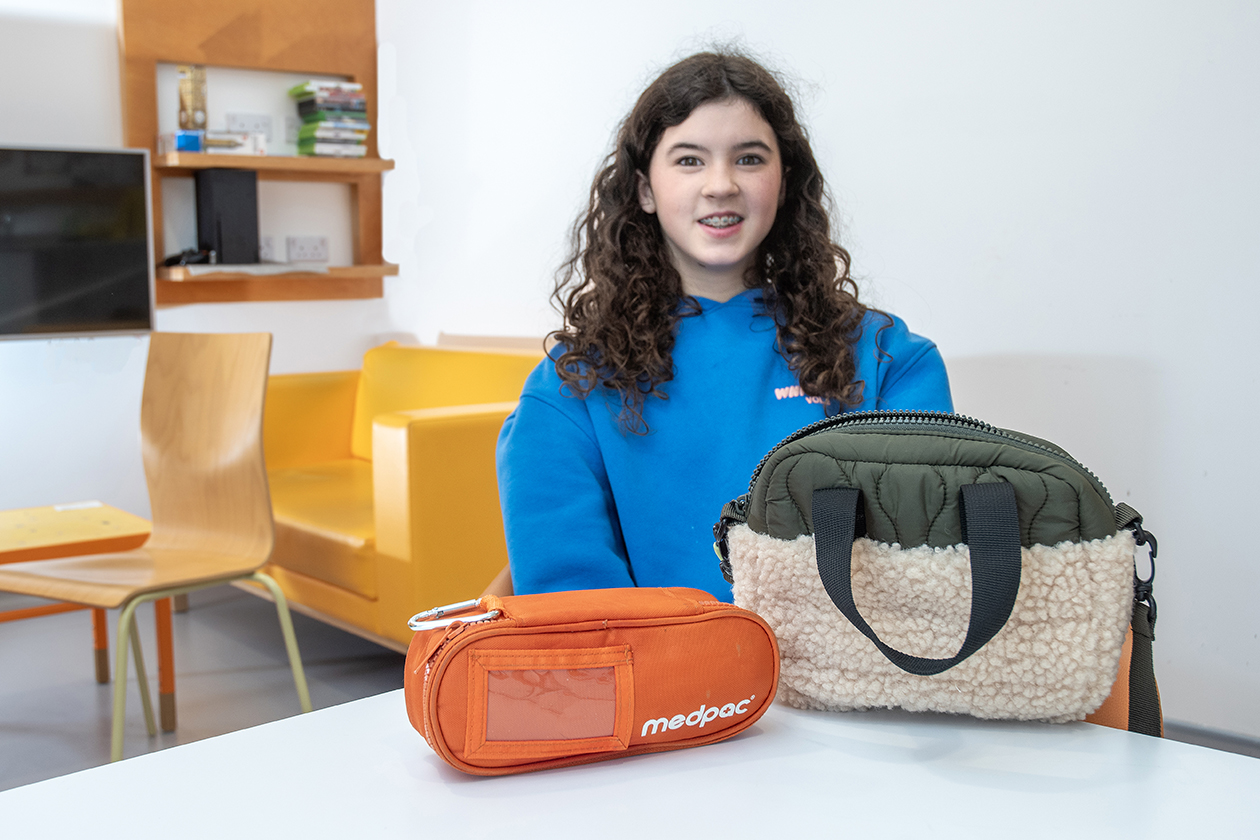
Now at secondary school, Laila has been really open with her friends about her allergies, about her adrenaline device and has even shown them how to use it – great idea Laila! She carries it around in a small shoulder bag that looks like any other bag and is easy to grab and match with her outfits.
She makes sure it’s always in her room, ready to go, and her friends are great at reminding her too.
Laila told us about a time when she had to use her adrenaline device after a severe allergic reaction:
‘The medicine kicks in really quickly – I felt better in about five seconds, and then felt quite hyper straight afterwards. It’s really not that sore – the ear piercing was worse. It feels like a poke in the leg!’
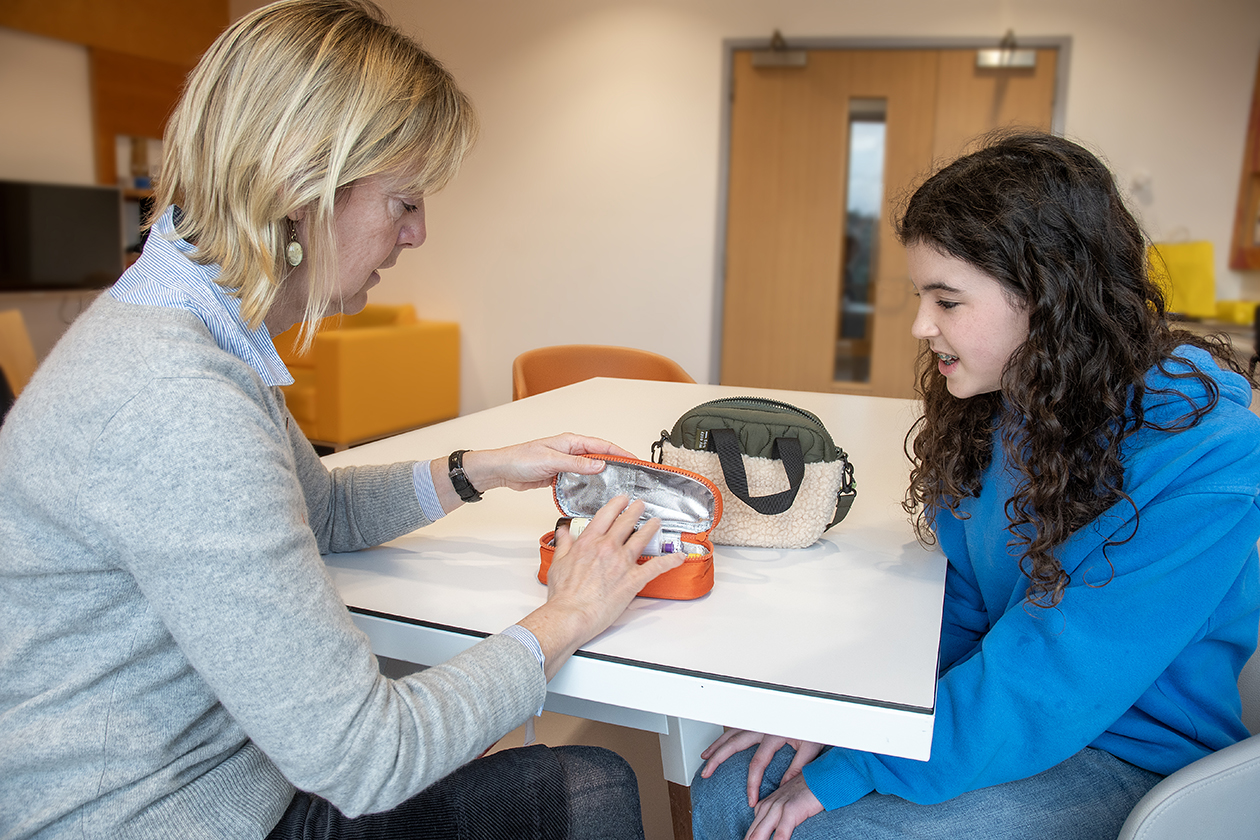
Laila’s top tips for being a teen with an allergy:
- Check the ingredients when you’re out and about – and at parties.
- Don’t be scared to use your Epipen or adrenaline device – the longer you leave it, the worse you will feel.
- Be brave and try some new foods – you might discover a really great alternative if you try some different things.
- Be open with your friends about your allergies – they can be really helpful.
Further help and information
Allergy
- Allergy UK Opens in new window
- Anaphylaxis Campaign Opens in new window
- British Association of Allergy and Clinical Immunology Opens in new window
- Children and Young Peoples Allergy Network Scotland Opens in new window
- British Dietetic Association Opens in new window
- Food Standards Scotland Opens in new window
- Itchy Sneezy Wheezy Opens in new window
- Action Against Allergy Opens in new window
- Allergy Adventures (recipe ideas and allergen alternatives) Opens in new window
