Dunvegan is our inpatient surgical ward, for babies, children and young people who are being looked after by our surgical doctors and nurses. This might include having an operation or recovering after surgery and needing to stay overnight. Coming to Dunvegan ward doesn’t always mean that you need an operation. Some children may only stay with us for a short time and others may have lots of stays as we care for them as they grow and develop.
Telephone: 0131 3121332
Nurses in charge: Catherine Halliday & Sam Johnson
What to expect
Dunvegan can feel like a busy place, with space for 29 babies, children and young adults. Sometimes patients might be admitted in an emergency, for example after an accident or sudden illness. Other times you might have an operation or treatment plan scheduled on an agreed date.
Some children come to Dunvegan because they are under the care of a surgical team, but do not need to have an operation. A plan of care, treatment or therapy will be made for their time on the ward and discussed with children and their families, along with any changes that need to be made.
We understand that staying in hospital can bring up some big feelings. It is normal to feel nervous, worried or a bit scared. There are lots of people on the Dunvegan ward who can answer any questions and help you try to feel calm and relaxed. We also have plenty of things to do to try and fill the time while you are staying with us.
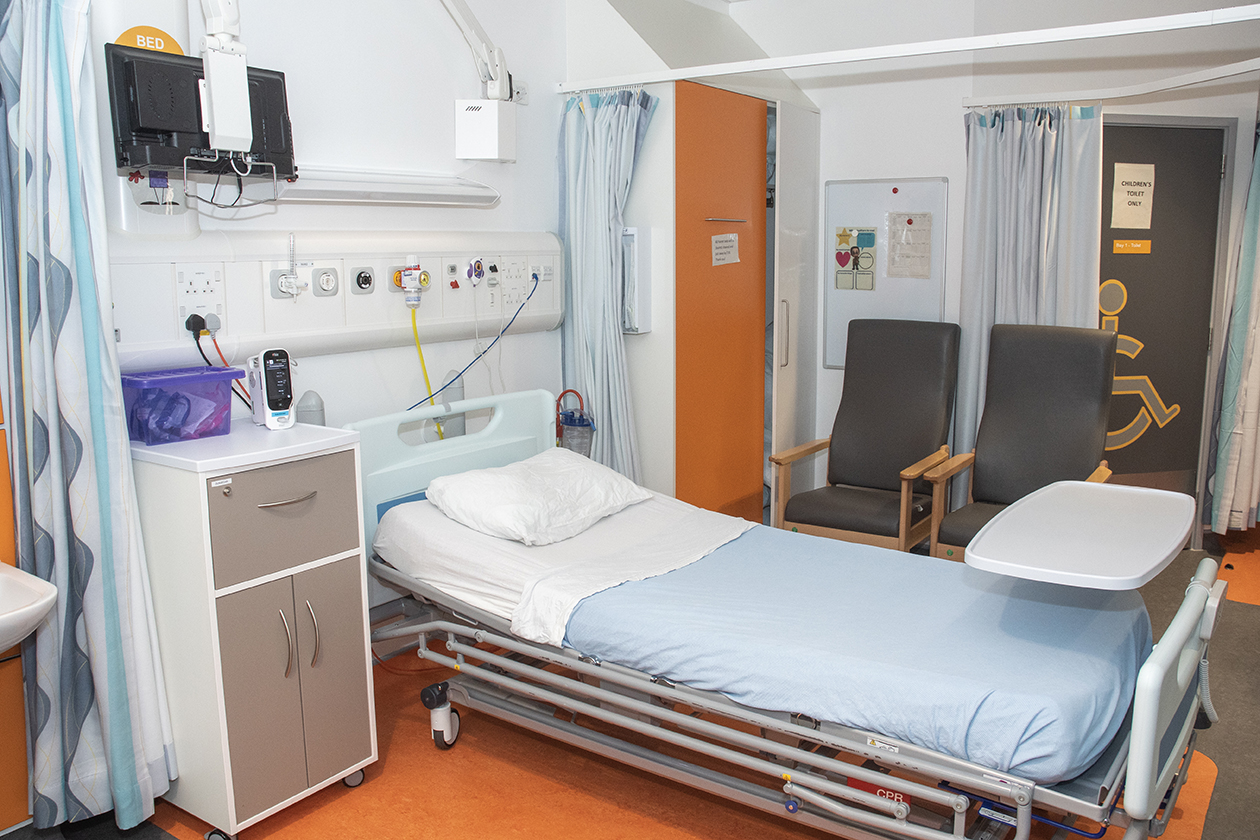
Dunvegan ward has a mix of single rooms and 4-bed bays. Each bed space has a pull-down bed for a parent, adult family member or carer to stay in the hospital with you, as well as access to a bathroom with a toilet, sink and shower (for patients). There is a separate shower room for adult family members on Level 3 – please ask the nursing team to show you if you’d like to use it.
Before your operation
It is normal to have some tests, scans or an X-ray before an operation. Sometimes you might need to have a blood test.
Having an operation means that you will have an anaesthetic. There are different types. A local anaesthetic makes an area of your body numb for a short time so that you don’t feel anything on that part of your body.
A general anaesthetic is some sleepy medicine that sends you to sleep for a short time while your operation takes place.
Your anaesthetist and surgeon will come to meet you before your operation, to talk about what will happen and to answer any questions. Your adult family member or adult carer will be asked to give their permission for you to have your operation – this is known as giving consent.

It is important to get changed out of your normal clothes before your operation – you will be given a special gown to wear, or sometimes can wear your pyjamas, depending on which part of your body your operation will affect. Wearing a gown is important because it helps to prevent infection, is comfortable, and safe and allows the doctors to start your surgery as quickly as possible. It also means that your everyday clothes can stay in a safe place, next to your bed space and ready for later.
Fasting
Fasting means not having anything to eat or to drink for a certain amount of time and is important. Children need to have an empty stomach before a general anaesthetic – this means no food for 6 hours beforehand (including cow’s milk or formula), and no breast milk for 4 hours beforehand.
Clear fluids like water, diluting juice (or even black tea or coffee!) are ok up until an hour before surgery. You will be given instructions about what to do before your operation – please follow these fasting rules because they are important.
After your operation
Children will wake up in one of our recovery areas, next to their operating theatre. When they are well enough they will be brought back to Dunvegan ward. It is normal to feel sleepy, dizzy or a bit upset after an anaesthetic. Parents and family members can wait for their child on the ward, go for a walk or have something to eat. The ward team will give each family an idea of how long surgery might take.
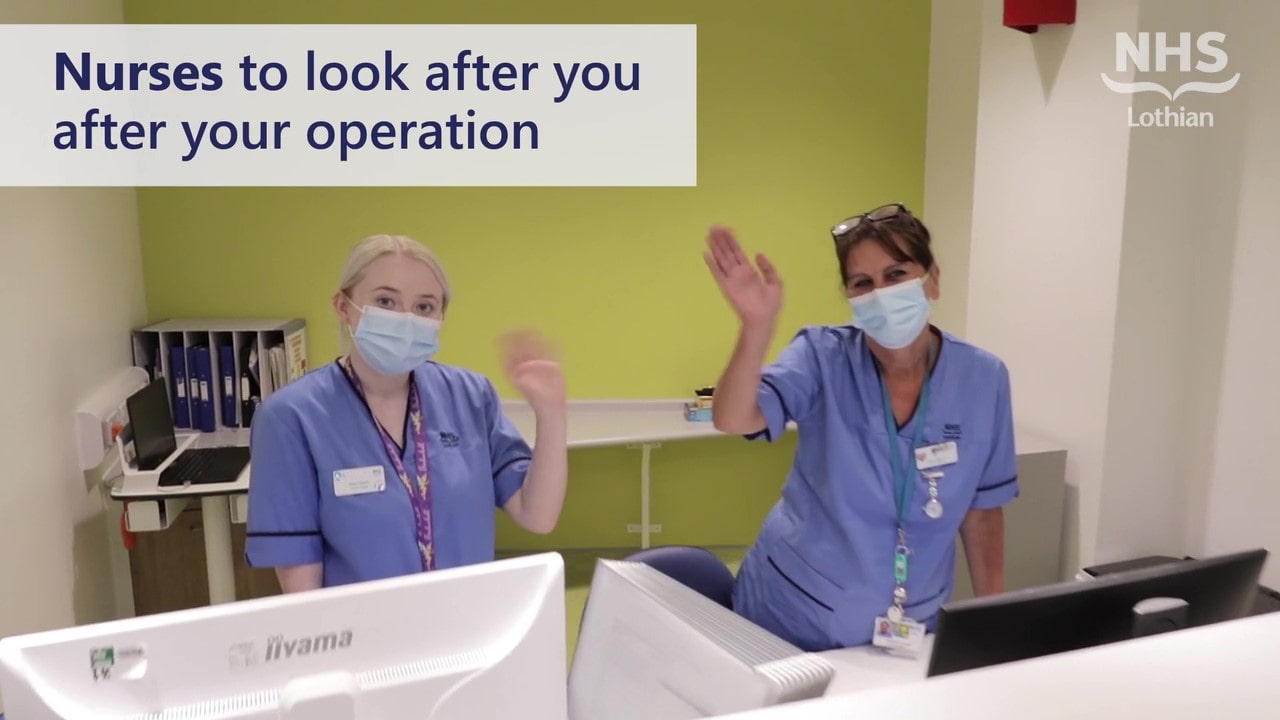
It is normal to feel sore after an operation. Pain relief medicine will be available to help with any pain. Please let your child’s nurse know if they are feeling uncomfortable. Family members should never give out any pain relief themselves (e.g. Calpol or other paracetamol medicines), to avoid an accidental overdose.
Some children can eat a light snack like toast and jam and have a drink of water or juice as soon as they feel well enough after their operation. Others might have to wait a bit longer before being allowed to eat. Please don’t have anything to eat or drink until a doctor or nurse has said this is ok.
Most children can recover very quickly after their operation and will be encouraged to get out of bed, play and move around normally as soon as they are able. It is normal for a lot of different people to come and see patients while they are recovering. This will include their surgeon, doctors, nurse specialists, physiotherapists, pain specialists and anyone else involved in their treatment and care. Some families find that it can be helpful to write down notes or any questions to help them remember things they’d like to ask.
Ward routine & meals
Dunvegan ward can be a very busy place, with children being admitted 24 hours a day, sometimes from the Emergency Department. Everyone on the ward will do their best to help patients sleep or get some rest at night, although some children might need medication or observation during the night as well as during the day.
Ward rounds take place first thing in the morning (at around 8am) and again in the evening (at around 8pm). There are usually a lot of people on the ward round – this might feel a bit busy, but everyone is there to help make the best decisions for you.
They are also very happy to answer questions. It is normal for doctors, surgeons, anaesthetists or other specialists to come and see patients at other times as well.
Meals are provided to children during their time on the ward, including:
Breakfast – 8am
A choice of cereals, toast, yoghurts and fruit
Lunch – 12noon
Selection of hot meals and sandwiches
Dinner – 5pm
Selection of hot meals and sandwiches
Snacks and drinks are available for children outside these times, especially for children who may have missed a meal due to fasting – please just ask.

Breastfeeding your baby
The RHCYP support you to provide breast milk for your baby, as far as possible, either directly or by pumping. Pumps, storage bottles and a dedicated fridge and freezer are available for expressed breast milk. Our hospital is excited to be working towards UNICEF baby friendly accreditation.
If you are breastfeeding and finding it difficult to provide food and water for yourself, please ask the staff for support.
Family support & visiting information
Dunvegan ward has open visiting hours with parents and family members able to stay with their child as much as possible. There is a Family Sitting Room on level 3, with a fridge, kettle, microwaves and comfortable seating.
Children who need to spend a long time in the hospital can benefit from visits from friends and family members. Siblings aged 5+ are welcome to visit and younger siblings may be allowed onto the ward after discussion with the nursing team. To protect all of our patients, visitors should not come to Dunvegan ward if they are feeling unwell, for example, have symptoms of a cold, flu or upset stomach.
Wifi
Free Wifi is available for families to connect their mobile phones or tablets from home. Wifi codes are available from the nursing team, or one of the play specialists.
Family Support
Some families can find themselves admitted to Dunvegan after an emergency or at very short notice. If you need a supply of toiletries or any personal items, please speak to your child’s nurse as emergency care packs for families are available. Family support services include help with the unexpected costs of having a child in hospital, advice, support and someone to listen.
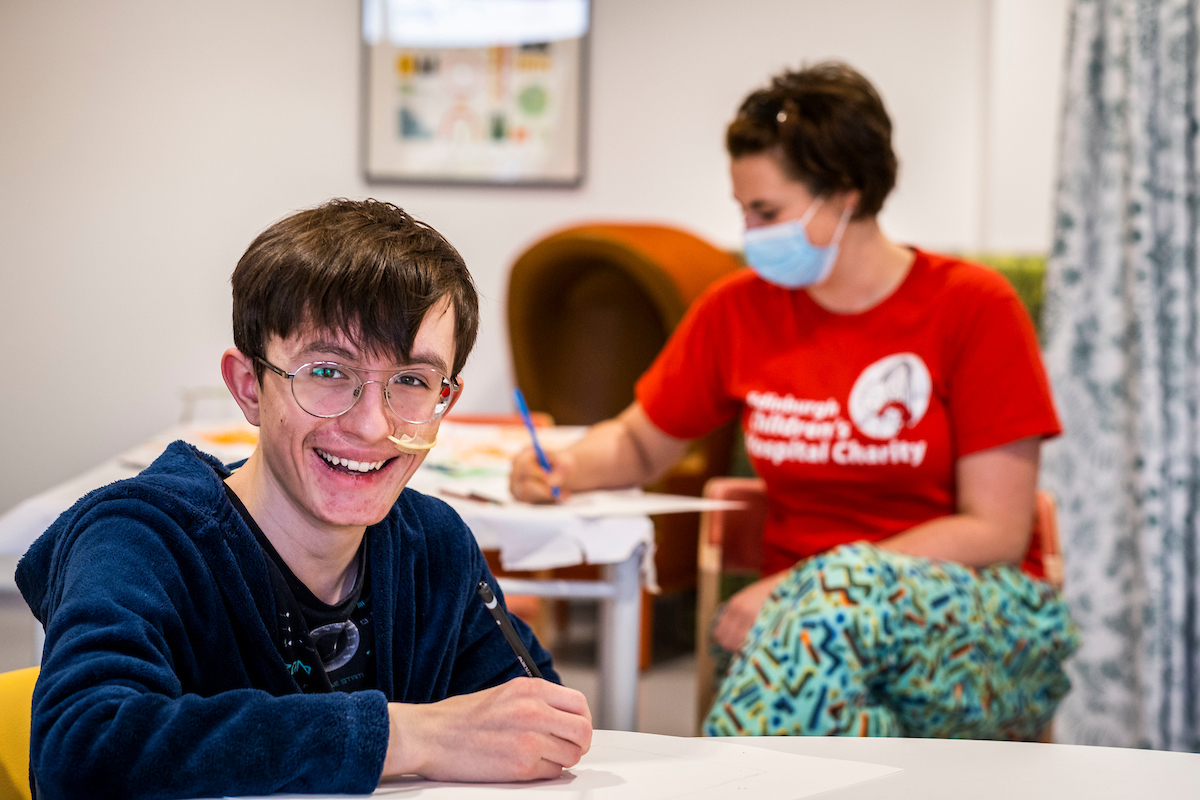
The Family Support corridor is where you can find the Edinburgh Children’s Hospital Charity Hub, full of activities and home to our Children’s Wellbeing team who can offer a range of specialist advice.
The Hub is open for families to drop in during the week (Monday-Friday, 9am – 4pm). Your child’s nurse can also help direct you to the type of family support you need, with everything from financial advice to emotional support. Find out more information on the Family Support page.
Children who find hospital difficult
We understand that many children can find it difficult to cope with being in hospital, changes to their routine, adapting to a new environment and feeling unwell or sore. For children with additional needs, this can be more difficult. Please speak to your child’s nurse if there is something that we need to know about your child’s care or something that we can do to make your stay more comfortable.
Our Learning Disability nurse specialist can help to plan and coordinate care for children with additional needs and can be contacted by speaking to your child’s nurse, or the charge nurse on Dunvegan ward. Our play specialists have experience of supporting children to cope in hospital – they are usually found on the ward Monday-Friday. Please ask if you’d like them to come and speak to you about something specific.
Play specialists & play rooms

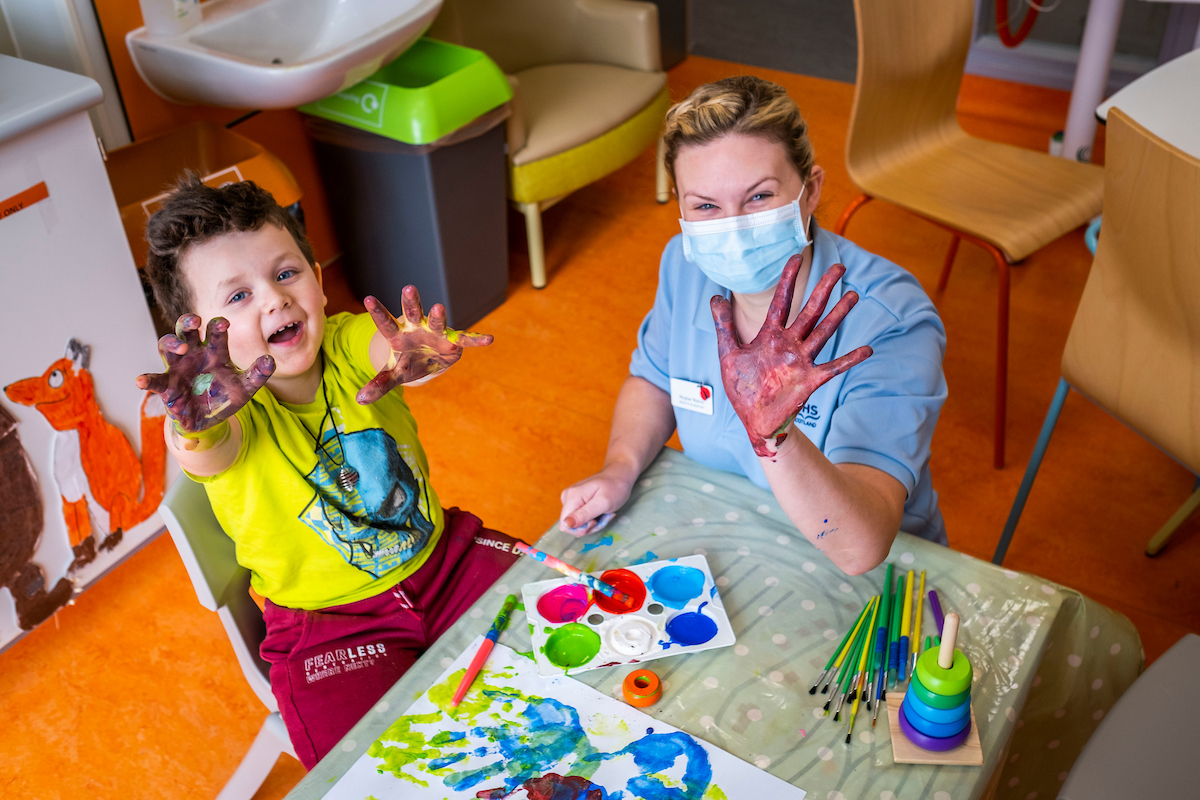
Dunvegan ward has two playrooms and an outdoor courtyard (next to the reception desk). Our play team members can help children and young people feel ready for their operation and explain what to expect.
They can also help to distract children during procedures and are always on hand with toys, art activities, messy play and craft supplies. Look out for a visit from our Clown Doctors as well as different magicians, artists, dancers and special visitors through Edinburgh Children’s Hospital Charity arts programme.
If your child is worried or feeling scared about anything in particular, please tell their nurse who can chat with them or arrange for a visit from one of the play specialists.
Going Home
Going home is also called ‘being discharged’. This often takes a lot of coordination between teams, for example if the doctor needs to come to see you, follow-up appointments need to be made or there are medicines to take home. We do our best to be as organised as possible and discharge children home without too much waiting time, but sometimes it can take a while.
A letter will usually be sent to your family doctor to let them know about your child’s admission to hospital and the reason for their stay. If you need a copy of the discharge letter (for example for a parent’s work or for insurance reasons) please ask the team on the ward before you leave.
