Asthma is a common condition, affecting almost 10% of children and young people in Scotland.
The Asthma team, based at the Royal Hospital for Children and Young People, provides outpatient and in-patient care for children and young people with asthma and recurrent wheeze. We work with other teams and departments to diagnose and treat asthma and related conditions. The asthma clinic looks after about 300 children and young people, with many more being looked after by their GP and regular prescriptions for an inhaler to relieve their symptoms.
Asthma can be serious. We aim to prevent severe and life-threatening attacks by assessing, educating, and treating patients in the best way for them and their families. Having asthma can be worrying; symptoms can sometimes affect daily life, like going to school or playing with friends or joining a sport. With our help and support, young people and families can benefit from treatment – and preventions – to reduce the risk of asthma symptoms getting worse.

Difficult Asthma
It is a term used to describe symptoms that are more difficult to treat in some young people. This service seeks at the whole situation for each patient with difficult asthma. Usually, it combines clinical tests, more in-depth testing, home visits, prescription pickup analysis, physiotherapy and psychological support.
Meet the team
Nurse Specialists:
Consultants:
Get in touch
Coming to a clinic
Asthma clinics can take place over a video call or by phone and in the hospital. They are to make sure you are healthy and to check whether you have any new breathing problems. If you are asked to come to the hospital, you can bring a parent or other carer to help you. Clinics usually take place in our Outpatients Department.
First, a nurse will meet you and check your name, after which your weight and height will be measured to see how you have grown. You might be asked to do some blowing tests.
We will talk with you about your asthma and check your medicines. We might also listen to your chest with a stethoscope and examine the rest of you to check you are well. Sometimes we do some other tests, like blood tests or skin prick tests, to get a full picture of what is happening inside your body. You can find out about it in the tests section.
If you like, you can ask us some questions. You might want to write any questions down and bring them to the clinic, so you don’t forget. Once we have made a plan with you and your parent or carer, you will be able to go home. If you feel unwell during the clinic, we might ask you to stay in a hospital ward, but this doesn’t happen very often. You can find out more about staying in the hospital section.
Using an Inhaler
Using an inhaler with an AeroChamber Plus® Flow-Vu® and mask
The AeroChamber Plus Flow-Vu and mask is a spacer for use with an inhaler for children aged 1-5 years old.
| Step 1 | 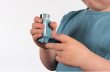 |
Remove the cap from the inhaler and check that there is nothing inside the mouthpiece. |
| Step 2 |  |
Shake the inhaler well. |
| Step 3 | 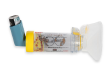 |
Place the inhaler in the open end of the spacer. |
| Step 4 | 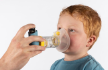 |
Place the face mask over the child’s nose and mouth and press down once on the inhaler. |
| Step 5 |  |
Allow the child to breathe in and out normally for 5 gentle breaths, watching the valve above the nose move with each breath. |
| Remove the spacer from your child’s face and wait for 30 seconds before repeating steps 2 – 5 if a further dose is needed. | Your spacer should be washed weekly if used regularly – please refer to the leaflet inside the packaging for washing instructions. |
Using an inhaler with an AeroChamber Plus® Flow-Vu® Youth mouthpiece
The AeroChamber Plus Flow-Vu Youth is a spacer for use with an inhaler for children and young people aged over 5 years old.
| Step 1 | 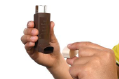 |
Remove the cap from the inhaler and check that there is nothing inside the mouthpiece. |
| Step 2 | 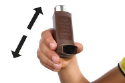 |
Shake the inhaler well. |
| Step 3 | 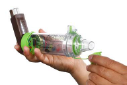 |
Place the inhaler in the open end of the spacer and remove the cap from the mouthpiece. |
| Step 4 | 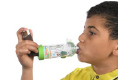 |
Place your teeth and lips around the mouthpiece and press down once on the inhaler. |
| Step 5 |  |
Keeping your lips around the mouthpiece, take 5 gentle breaths in and out, watching the valve above your nose move with each breath. If it whistles, you need to breathe in more slowly and gently. |
| Remove the spacer from your mouth and wait for 30 seconds before repeating steps 2 – 5, if a further dose is needed. | Your spacer should be washed weekly if used regularly – please refer to the leaflet inside the packaging for washing instructions. |
Inhaler technique
Using a pMDI inhaler with an AeroChamber Plus Flow-Vu® Spacer and Mask (for children aged 1–5 years)
Using a pMDI inhaler with an AeroChamber Plus Flow-Vu® Spacer with Mouthpiece (for children >5 years)
