The Cardiology department looks after children and young people with a wide variety of heart conditions, giving them specialist care and support. The services we provide include:
- Paediatric Cardiology for inpatients and outpatients.
- Outpatient Cardiac Clinic for children and young people.
- Outreach services across the Lothian, Borders, Fife, Tayside, Grampian and Highland regions.
- Fetal Cardiac Service.
- Transition Service.
- Family support
Babies, children and young people needing cardiac surgery and catheter intervention are referred to the Scottish Paediatric Cardiac Service based at the Royal Hospital for Children in Glasgow.

Meet the Team
Dr Mohammad Walayat
Lead Consultant Cardiologist
Dr Richard Ferguson
Consultant
Dr Georgios Meridis
Consultant Cardiologist
Dr Mairi MacInnes
Paediatrician with Expertise in Cardiology
Hannah Barr
Nurse Specialist
Our department has a team of Physiologists that see babies, children and young people to carry out different types of testing.
Contact us
For general enquiries, including about scheduled appointments, contact:
Cardiology Secretary/Admin
0131 312 0433
Coming to a clinic
Outpatient appointments are held at the Royal Hospital for Children and Young People in Edinburgh. You will receive a letter with your appointment time and date. During the visit to the clinic, each patient’s height and weight will be recorded. Sometimes, oxygen levels, heart rate and blood pressure are also checked. Sometimes a test or investigation might be needed (for example, an ECG or Echo). You can read more about these below.
Seeing the doctor
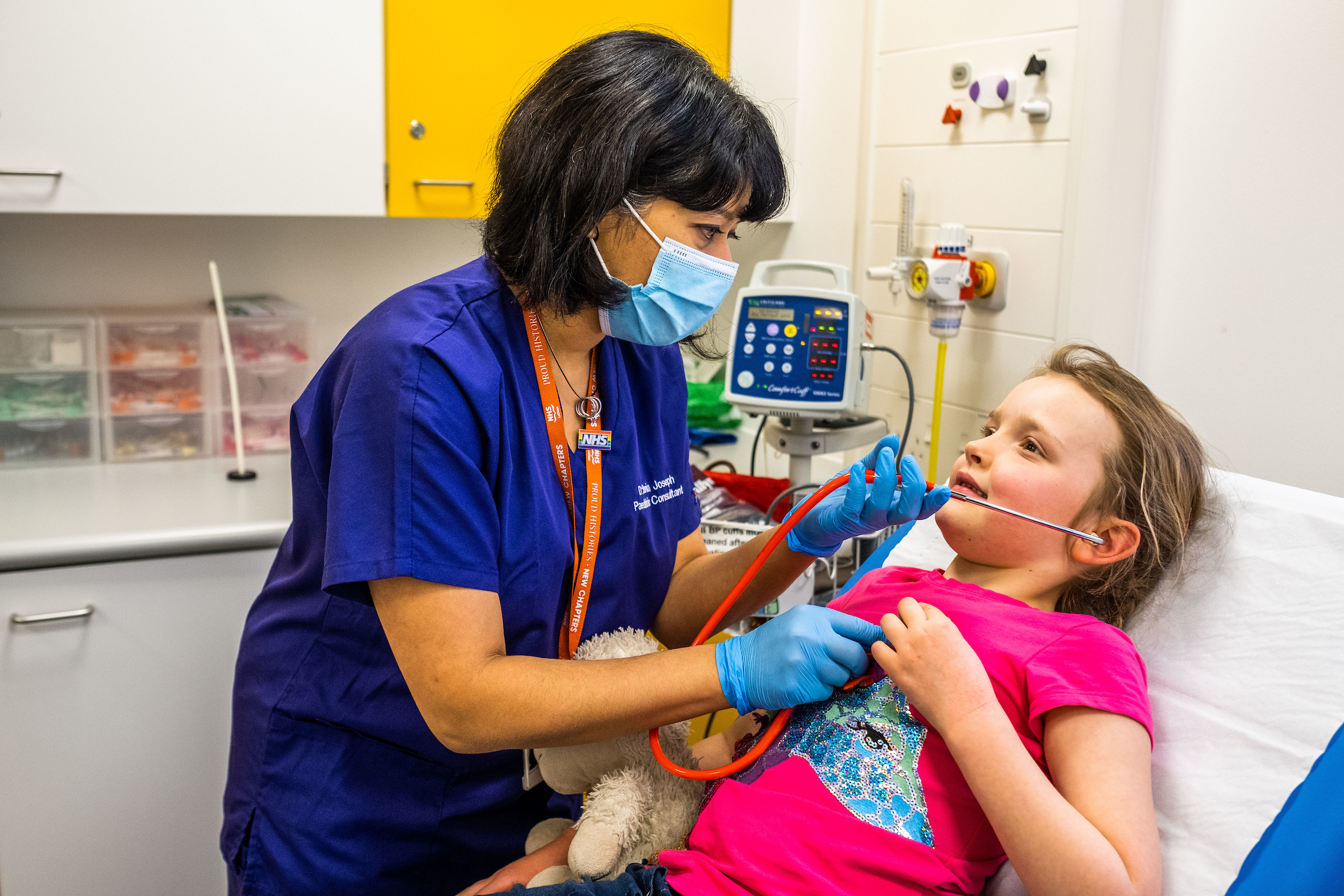
Patients are usually seen by a Cardiologist or Paediatrician with expertise in Cardiology. An examination will include listening to the heart with a stethoscope (also called auscilating) and checking your pulse around different parts of the body, including near the top of your legs.
There will be a discussion about why you have come to the clinic and any results can be explained, along with what, if anything, will happen next. Some patients only need to come to the cardiology clinic once and are then discharged. Others may need to come back again to be reviewed. This will be discussed. The Cardiology team are always happy to answer any questions you might have – it might be helpful to have a think about any questions before you come and write them down, so you don’t forget.
Investigations
ECG
An electrocardiogram (or ECG) check the heart’s rhythm and records the electrical impulses that come from the circuits within the heart. These will show if they are working properly and can help assess if the chambers of the heart are doing extra work. Wires are connected to ten stickers and placed on the chest, arms and legs. An ECG does not hurt. The heart tracing is printed on a piece of paper.
Echo
An echocardiogram is a scan that uses ultrasound waves to produce images of the heart. It is used to diagnose heart defects and better understand how the heart is functioning. An echo is similar to an ultrasound many women have to see their unborn baby but focuses specifically on the heart and the blood vessels around the heart. Having an echo does not hurt, and there are no side effects. An echo uses no radiation and is safe.
Heart monitor
A heart monitor can be used to assess your child’s heart rate and rhythm for 24 hours or longer. It can be used to identify abnormal heart rates or rhythms, which may or may not be associated with particular symptoms. A heart monitor is also sometimes called an ‘ambulatory heart monitor’ or a ‘tape’.
Other tests
- Pacemaker check
Some children may need pacemakers to control abnormal heart rhythms. The physiologist will check these are working properly. - Exercise test
An exercise test is useful for several cardiac conditions. It is used to check the response of the heart when exercised to its limit. Exercise tests are carried out in the hospital to allow close monitoring of children and young people throughout. Ready, steady, go!
Being referred for surgery or an intervention
All babies, children and young people who need cardiac intervention or surgery are referred to the Scottish Paediatric Cardiac Service (SPCS), which is based at the Royal Hospital for Children in Glasgow. The team at the RHCYP will work together with the team in Glasgow to try to make this as smooth as possible for your family.
New cases are discussed at a Joint Cardiac Conference, which is a meeting of different experts and specialists to make decisions about each child’s care, whether surgery is needed and the timing of any operations or interventions. Your child’s Cardiologist will be part of this Conference. If your child is scheduled to have surgery, your Cardiologist will let you know when to expect the operation and the type of procedure that will be carried out.
Follow-up letters will be sent by the SPCS team in Glasgow, for you to read and return.
It is normal to have a number of checks and tests before surgery, including a dental appointment to check the condition of your child’s teeth. Families will be invited to a surgical clinic, to meet with surgeons, and cardiac nurse specialists and find out more about surgery and recovery in hospital. This meeting takes place in Glasgow and usually includes an opportunity for a tour of the ward.
When a date for surgery is scheduled, families will be invited to a pre-assessment clinic, usually one week before the date of your child’s operation. This clinic is run by Cardiology Advanced Nurse Practitioners and also takes place in Glasgow. It is normal to have several tests, which might include an ECG, Echo, chest x-ray, and blood tests. These tests give the surgery team as much information as possible about your child’s health before their operation.
Sometimes it might be necessary to cancel and reschedule a child’s operation, even when surgery is scheduled in advance. This might be because babies or children have been admitted in an emergency, or because the hospital has become very busy and a bed may not be guaranteed. Cancellations are a last resort but are sometimes necessary to ensure the safety of all of our patients.
Parents and carers bringing a child to Glasgow will be offered help with accommodation if needed, and the young patient’s family fund is available in Scotland to help with travel expenses and other costs when families have a child in hospital.
Find out more about the Royal Hospital for Children in Glasgow.
Fetal Cardiology: during pregnancy
Fetal cardiology diagnoses heart conditions in unborn babies. Edinburgh has a fetal cardiac service, and regular joint fetal cardiac clinics are held at the Simpsons maternity unit. These clinics are supported by a team of doctors and midwives, including a Paediatric Cardiologist and Cardiac Nurse Specialist. A pregnant woman with suspected fetal defects is referred to this service from across the Lothians and Borders regions. Most babies with prenatally diagnosed cardiac disease are delivered at their local hospital and Neonatal Unit.
Mothers with more complex fetal cardiac diagnoses will be referred to the Fetal Cardiology team at the Queen Elizabeth Hospital in Glasgow. They will be booked in to deliver their babies there, with specialist help available from shortly after birth, including surgery if needed.
Tiny Tickers offers support and information for families expecting a baby, where there might be a heart condition diagnosed before the baby is born.
Cardiac Nurse Specialist
Our Cardiac Nurse Specialist is based at the RHCYP and provides ongoing support, information and advice to children, young people and their families who have a congenital (present from birth) or an acquired (develops after birth) heart condition. They might meet patients during hospital admission or at clinic appointments or give support and advice to patients at home.
The Nurse Specialist might become involved as soon as a child is diagnosed with a heart condition, sometimes before a child is born. This support may continue until the young person transitions (moves on) to the Scottish Adult Congenital Cardiac Service, usually around their 16th birthday.
The Nurse Specialist also works closely with the Glasgow team (Scottish Paediatric Cardiac Service) to provide a smooth journey for our cardiac families, considering all aspects of a patient’s care and wellbeing.
What kind of support can be provided?
- Non-urgent telephone advice and support (Monday to Friday 8 am to 4 pm excluding public holidays)
- Antenatal (before birth) support, counselling and pre-birth preparation.
- Support for children and their families at the time of diagnosis.
- Education about heart conditions and the necessary treatment or interventions.
- Advice and information for nursery or school and the development of a care plan (if required).
- Liaising with educational services.
- Attendance at outpatient clinics to support families during or after consultations.
- Support and education during hospital admissions.
- Help for teenagers and young people during their transition to adult services, including visits to a Nurse Specialist-led Transition Clinic, to learn about their condition and care into adulthood.
- Liaising with other health or social care providers, e.g. Community Children’s Nurses, Health Visitors, Social Work, Dieticians, Speech and Language, Physiotherapists, Occupational Therapists, Family Support, Money Advice Services, Clinical Psychology.
- Bereavement support to families.

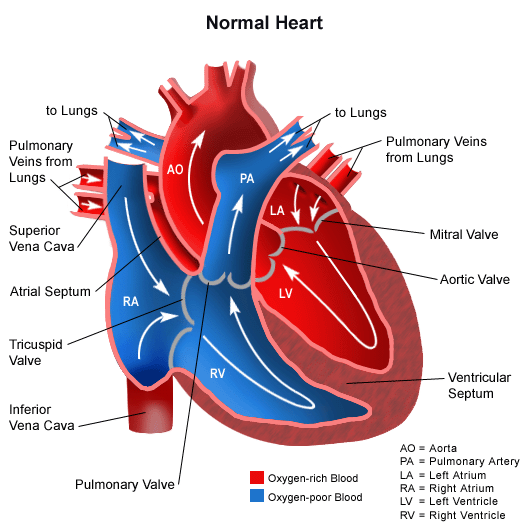
Heart Defects: Information for Families
Aortic Stenosis Opens in new window
Atrial Septal Defect (ASD) Opens in new window
Coarctation of Aorta Opens in new window
Complete & Partial AVSD Opens in new window
Common Arterial Trunk(Truncus) Opens in new window
Large Ventricular Septal Defect Opens in new window
Patent Ductus Arteriosus Opens in new window
Pulmonary Stenosis Opens in new window
Pulmonary Atresia with VSD Opens in new window
Pulmonary Atresia with Intact Ventricular Septum
