Breathing problems may be discovered after birth, can be something that develops over time or due to an infection or accident. WellChild Respiratory Clinical Nurse Specialists (CNS) provide essential care and practical support to children and young people with exceptional health needs and families. They play a crucial role in enabling children to leave the hospital and be cared for at home, reducing the practical, emotional and financial impact for families. There are two WellChild Nurse Specialists helping children and young people across the Lothian area, the wider South-East of Scotland and Tayside regions whose long-term and complex health problems mean they need medical support for their airway and or breathing.
What we do
 WellChild Nurse Specialists are part of the Respiratory team, supporting families by working closely with colleagues in the community, hospitals, hospices and other specialist centres. We also work in partnership with the wider multidisciplinary team (a group of departments and specialists working together) to support children and young people getting ready to be discharged, help patients within community settings and prepare older children to transition into Adult Services.
 Training and support
Continued support
- Supporting the discharge home of the child or young person with NPA or tracheostomy
- Providing airway and respiratory training for parents, families and the team looking after a young patient.
- Supporting the discharge home of children dependent on ventilator support.
- Advising on complex care packages.
- Planning individual ventilation escalation plans.
- Establishing a child or young person on portable ventilators.
- Producing ventilator weaning plans
Types of breathing support
What is CPAP?
CPAP (Continuous Positive Airway Pressure) is a type of respiratory support therapy used to overcome airway obstruction. The air is given to a child through a mask attached to an electrically powered machine called a CPAP driver. The mask (nasal, face or prongs into the nostrils) is held in place by a little cap (headgear) or straps.What is Bi-Level Ventilation?
Bi-Level ventilation (BIPAP) is breathing support that assists your child’s ability to breathe. It involves the use of a mask and a BIPAP ventilator. The ventilator blows pressurised air through a mask into the airway and lungs. This will open up the airway to allow normal breathing to occur. The machine is to improve a child’s quality of life rather than to provide life support. The BIPAP ventilator supports each child’s breathing pattern. If they cannot take a deep enough breath to fill their lungs and allow normal breathing to occur adequately, the BIPAP machine will support their breath and ensure the lungs are given enough air to allow normal breathing. Normal breathing is important as it allows the body to take in enough oxygen to meet its needs and allow carbon dioxide (a waste gas) to leave. Bi-Level therapy's pressure is delivered at two levels – inspiratory (breathing in) and expiratory (breathing out) pressure. The pressure increases when breathing in and decreases when breathing out.What is a Nasopharyngeal Airway?
A modified NPA is a soft plastic airway tube cut to an individual child’s requirements and the prescribed size for each young person. It is inserted into the nasal passageway and aims to bypass upper airway obstruction at the level of the nose, nasopharynx or base of the tongue. It acts as a splint that keeps the tongue from falling back and blocking the airway.What is a Tracheostomy?
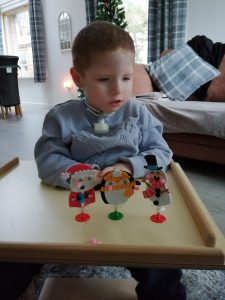
A tracheostomy is an opening created at the front of the neck so a tube can be inserted into the windpipe (trachea) to help a child breathe. This will need an operation to perform the opening to insert the tube. The tube can be used to help clear airway secretions that might have built up in the throat and windpipe. If necessary, the tube can be connected to an oxygen supply or a breathing machine called a ventilator."Thea was born with a genetic condition causing all her muscles to be very weak. She was intubated at birth and it soon became clear that this was going to be a longer-term situation. It felt like the end of the world. The hospital suggested a tracheostomy as a route to get our girl home. It was daunting learning to care for Thea but our WellChild respiratory nurse specialists were there at every step to make sure we felt comfortable. Its amazing the routine just embeds in your life and now Thea has been home 3 years and attends a nursery (with support) and is getting stronger all the time.”Lynsey Scott – mother of Thea
Website Opens in new window || Email Opens in new window || Facebook Opens in new window || Twitter Opens in new window || Youtube Opens in new window || Instagram Opens in new window
